
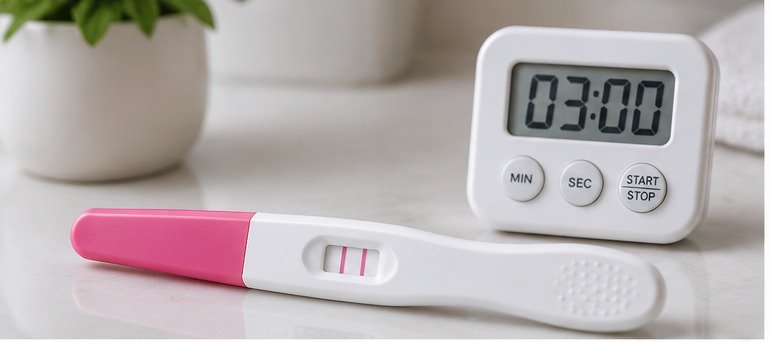
A home pregnancy test is a quick, private way to find out whether you may be pregnant. These tests detect human chorionic gonadotropin (hCG), a hormone produced during pregnancy. Used at the right time and according to the instructions, they can give a reliable result within minutes.
Testing too early, using the test incorrectly, or reading the result late can all cause confusion. This guide explains how to take a test correctly and avoid common mistakes.
Still choosing a test? See our complete guide to pregnancy test kits in Saudi Arabia for test types, prices, and buying tips.
Quick summary:
- Test on the first day of a missed period for the most reliable result.
- Use first morning urine if testing early.
- Follow your brand’s instructions, because the waiting time and method vary.
- Read the result only within the stated time window.
When Should You Take a Pregnancy Test?
Timing matters most. Some tests are marketed for early detection, but testing too soon can give a negative result even when you are pregnant.
For most tests, the first day of a missed period is a good time to test, because hCG levels are usually high enough by then. If you don’t know when your next period is due, the NHS recommends testing at least 21 days after unprotected sex.

Tips before you test:
- Test at the right time: waiting until your period is due improves reliability.
- Use first morning urine: it is usually more concentrated, which helps in early testing.
- Don’t drink excessive water beforehand: diluted urine makes hCG harder to detect.
- Check the expiry date: an expired test may not work properly.
You can often test at other times of day, but follow the instructions for your product.
What Do You Need Before Taking a Pregnancy Test?
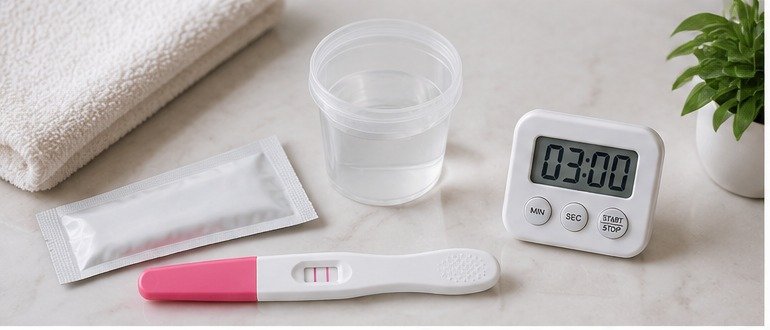
- An unused pregnancy test kit
- A clean, dry container (if the instructions require a urine sample)
- A timer or clock
- A clean, dry surface
Read the instructions before opening the test, because brands differ in procedure, waiting time, and how results appear. When buying in Saudi Arabia, choose a reputable pharmacy or retailer, check that the packaging is sealed, and confirm the test has not expired.
How to Use a Pregnancy Test Kit: Step by Step
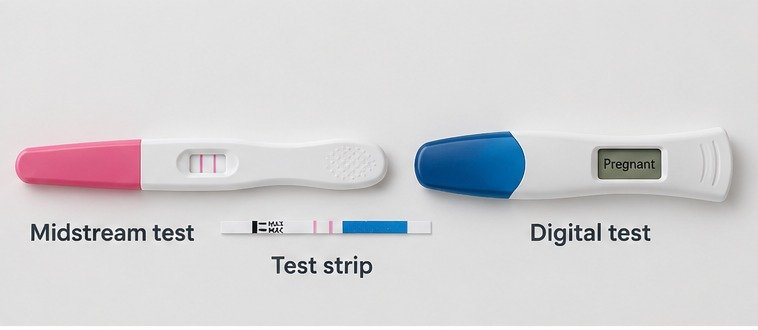
Home tests come in three main types: midstream tests, test strips, and digital tests.
Step 1: Read the Manufacturer’s Instructions
Check how to apply the urine, how long the test takes to develop, and how to recognize a valid result. Some tests need a collected sample, while others are held directly in the urine stream.
Step 2: Collect or Apply the Urine
- Midstream test: Remove the cap if instructed and hold the absorbent tip in the urine stream for the stated number of seconds. Some products also allow dipping the tip into a collected sample.
- Test strip: Collect urine in a clean, dry container. Dip the strip only up to the marked line, for the time stated.
- Digital test: Use the method in the instructions. Some are designed for direct use, others for collected samples.
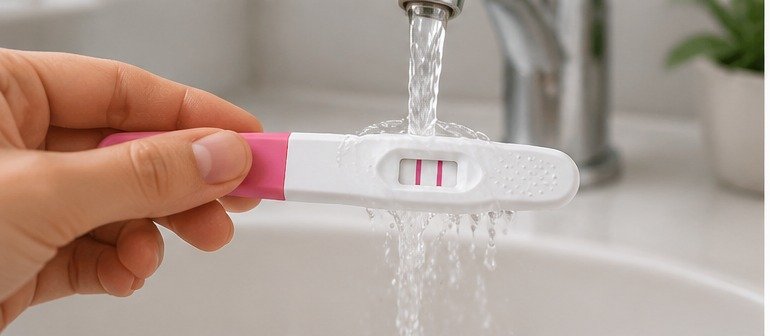
Avoid touching the absorbent area or wetting parts of the test that aren’t meant to get wet.
Step 3: Place the Test Correctly
If the instructions say to lay the test flat, do so. Keep it away from water and don’t move it while the result develops.
Step 4: Wait for the Recommended Time
Set a timer. Many tests give results within a few minutes, but the exact time varies. Reading too early may make you miss a developing line, and reading too late can be misleading because evaporation lines may appear.
Step 5: Check the Result
Read the result within the manufacturer’s time window and make sure the control indicator appears. It shows the test worked.
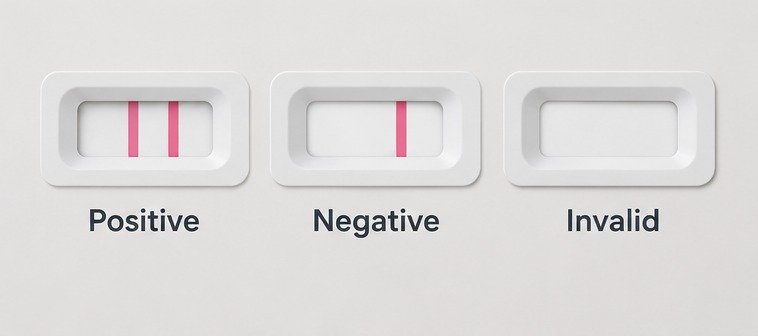
- Positive: hCG was detected.
- Negative: not enough hCG was detected.
- Invalid: no control indicator, or a result the instructions describe as invalid. Don’t rely on that test.
Need help reading what you see? Read our guide to [positive vs. negative pregnancy test results](BLOG URL).
What Does a Positive Pregnancy Test Look Like?
Line-based tests: A positive result usually shows a control line and a test line. The test line may be lighter than the control line, but it still counts if it appears within the reading time. A single control line usually means negative. Line patterns vary by brand, so use the diagram in your package.
Digital tests: These show a message such as “Pregnant” or “Not Pregnant.” They are easier to read, but you still need to follow the instructions.
What If the Test Line Is Faint?
A faint line may mean hCG was detected, especially in early testing. Repeat the test as directed or speak to a healthcare professional. Don’t trust lines that appear after the permitted reading time.
What Should You Do If the Result Is Negative?
A negative result doesn’t always rule out pregnancy, and testing too early is a common cause of false negatives. If your period hasn’t started, repeat the test after a few days, ideally with first morning urine. If results stay negative but your period is still absent, consult a healthcare professional.
Seek urgent medical care if you have severe abdominal pain (especially on one side), shoulder-tip pain, fainting, or significant dizziness. These can signal an ectopic pregnancy or another serious condition, even with a negative home test.
Common Mistakes to Avoid
- Testing too early
- Using an expired test
- Applying too much or too little urine
- Ignoring the waiting time
- Skipping the control indicator
- Drinking too much water beforehand
- Assuming all tests work the same way
Can You Take a Pregnancy Test After a Recent Pregnancy Loss or Abortion?
Yes, but the result needs careful interpretation. hCG can stay detectable for several weeks after a miscarriage or abortion, so a test may remain positive even when the pregnancy has ended. Ovulation can also return before your next period, so a new pregnancy is possible after unprotected sex.
Follow the testing schedule your healthcare professional gives you. Seek advice if your result stays positive longer than expected, symptoms continue, or you are unsure what the result means.
Frequently Asked Questions
Can I use a pregnancy test at any time of day?
Many tests can be used at any time. First morning urine helps for early testing because it is more concentrated. Always follow the product instructions.
How many minutes should I wait for the result?
It varies by product. Many tests take a few minutes, so check the package and don’t read the result outside the stated window.
Can a test be negative even if I’m pregnant?
Yes. Testing too early, diluted urine, or incorrect use can cause a false negative. Repeat the test after a few days if your period hasn’t started.
What does a faint line mean?
It may indicate pregnancy if it appears within the reading time and the test is valid. Repeat the test or consult a healthcare professional if you’re unsure.
What should I do after a positive test?
Contact a qualified healthcare professional to discuss next steps. Seek urgent care for severe abdominal pain, shoulder-tip pain, fainting, or significant dizziness.
Conclusion
To use a pregnancy test correctly, choose the right time, follow the manufacturer’s instructions, apply the urine properly, and read the result within the recommended window. An early negative may not rule out pregnancy, so repeat the test or seek medical advice if your period is absent or the result is unclear.
Next steps: Explore our guide to pregnancy test kits in Saudi Arabia or learn how to interpret your result in [positive vs. negative pregnancy test results](BLOG URL).