
Written by Dr Pooja (Gynecologist) · Last updated: 16 October 2026
What to Expect During an Abortion
There are two main types of abortion: medical abortion, which uses abortion pills such as mifepristone and misoprostol, and surgical abortion, a medical procedure that removes pregnancy tissue. Both methods have different procedures, recovery processes, and pain relief options.

Medical Abortion
A medical abortion can be provided at a clinic or, in some circumstances, managed at home. Whether home care is appropriate depends on the stage of pregnancy, your medical circumstances, and access to qualified healthcare support.
A medical abortion commonly involves two medicines: mifepristone and misoprostol. Mifepristone blocks progesterone, a hormone needed to sustain the pregnancy, while misoprostol causes the uterus to contract and expel the pregnancy tissue.
The treatment generally involves the following steps, according to the regimen prescribed by your healthcare professional:
- Taking mifepristone as directed.
- Waiting for the interval specified by your healthcare professional, commonly 24–48 hours.
- Taking misoprostol as prescribed. Depending on the regimen, it may be taken in the mouth or inserted into the vagina.
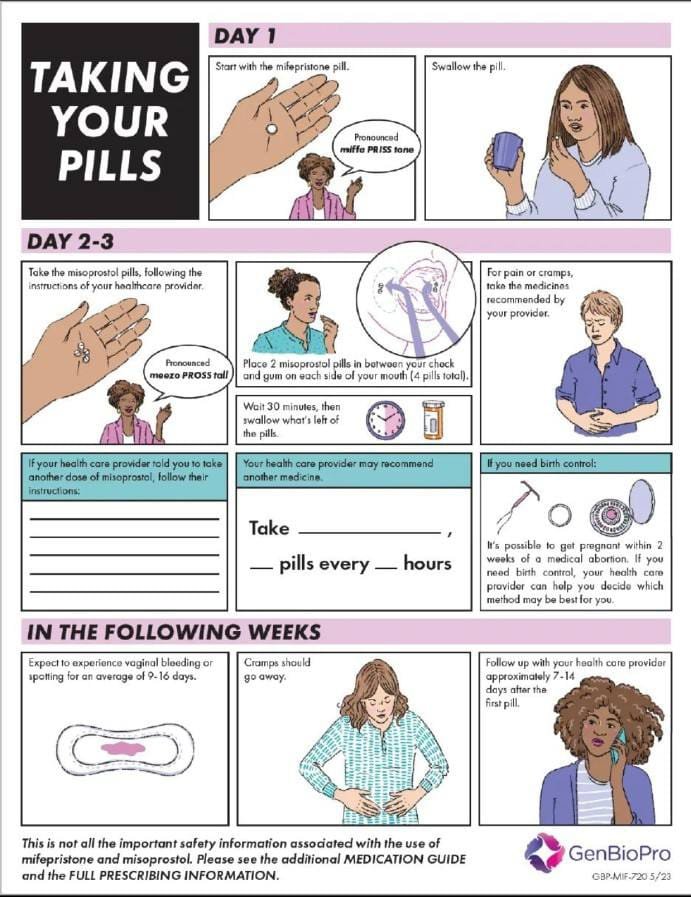
What happens after taking the medication?
After taking misoprostol, you may experience abdominal cramps and vaginal bleeding as the uterus expels the pregnancy tissue. This process often begins within a few hours, although the timing varies from person to person.
If the abortion does not appear to be complete, additional medication or another treatment may be necessary. Contact your healthcare professional for assessment and advice rather than taking an extra dose without medical guidance.
Important safety advice: Obtain abortion medication through a legitimate, regulated source and use it with appropriate medical guidance. Avoid unverified online sellers because the quality, authenticity, and safety of their products may be uncertain. Seek urgent medical attention for severe or worsening abdominal pain, fainting, or very heavy bleeding.
Surgical Abortion
Surgical abortion involves removing pregnancy tissue through the cervix using appropriate medical instruments. The method recommended depends on the duration of pregnancy, your medical circumstances, and the clinical setting. Surgical abortion can be performed earlier or later in pregnancy, depending on the procedure and applicable clinical guidance.
The main methods include:
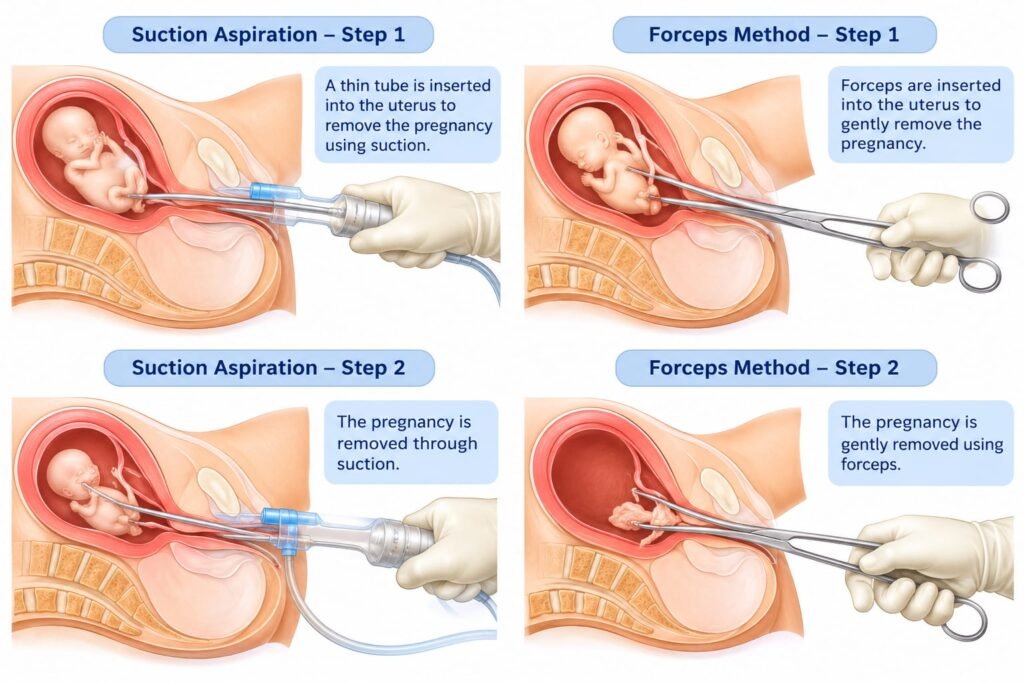
- Vacuum aspiration: A clinician uses gentle suction to remove pregnancy tissue through the cervix. It is commonly used during early pregnancy.
- Dilation and evacuation (D&E): The cervix is prepared and opened as necessary, and pregnancy tissue is removed using suction and appropriate instruments. This method is generally used later in pregnancy.
The procedure’s duration varies according to the method, stage of pregnancy, and individual circumstances.
Anaesthesia and Pain Relief
Before a surgical abortion, your healthcare team will discuss appropriate pain relief and anaesthesia options. These may include:
Local anaesthetic: Medication used to numb the cervix (the opening of the uterus) to help reduce pain and discomfort during the procedure.
General anaesthesia: Medication that puts you into a deep sleep during the operation, so you are unconscious and do not remain aware of the procedure.
Sedation: Medication that helps you feel calm and relaxed during the procedure. Depending on the level of sedation, you may remain awake or feel drowsy.
Many patients can go home on the same day, provided their healthcare team confirms that it is safe to do so.
If you have received general anaesthesia or sedation, follow your discharge instructions carefully. You may need a responsible adult to take you home and stay with you for at least 24 hours. Do not drive, operate machinery, or make important decisions until your healthcare team confirms it is safe.
Medical Reference
For related information, visit Abortion Riyadh.
Medical disclaimer: This article is for general educational purposes only and does not replace individual medical advice. Consult a qualified healthcare professional for guidance about abortion methods, eligibility, medication, and follow-up care.