

Mifepristone is the first of the two medicines used in a medication abortion. This guide explains what mifepristone is, how it works in the body, its medical uses, side effects, who should not take it, and how it differs from misoprostol. It is written for readers in Riyadh and across Saudi Arabia.

What Is Mifepristone?
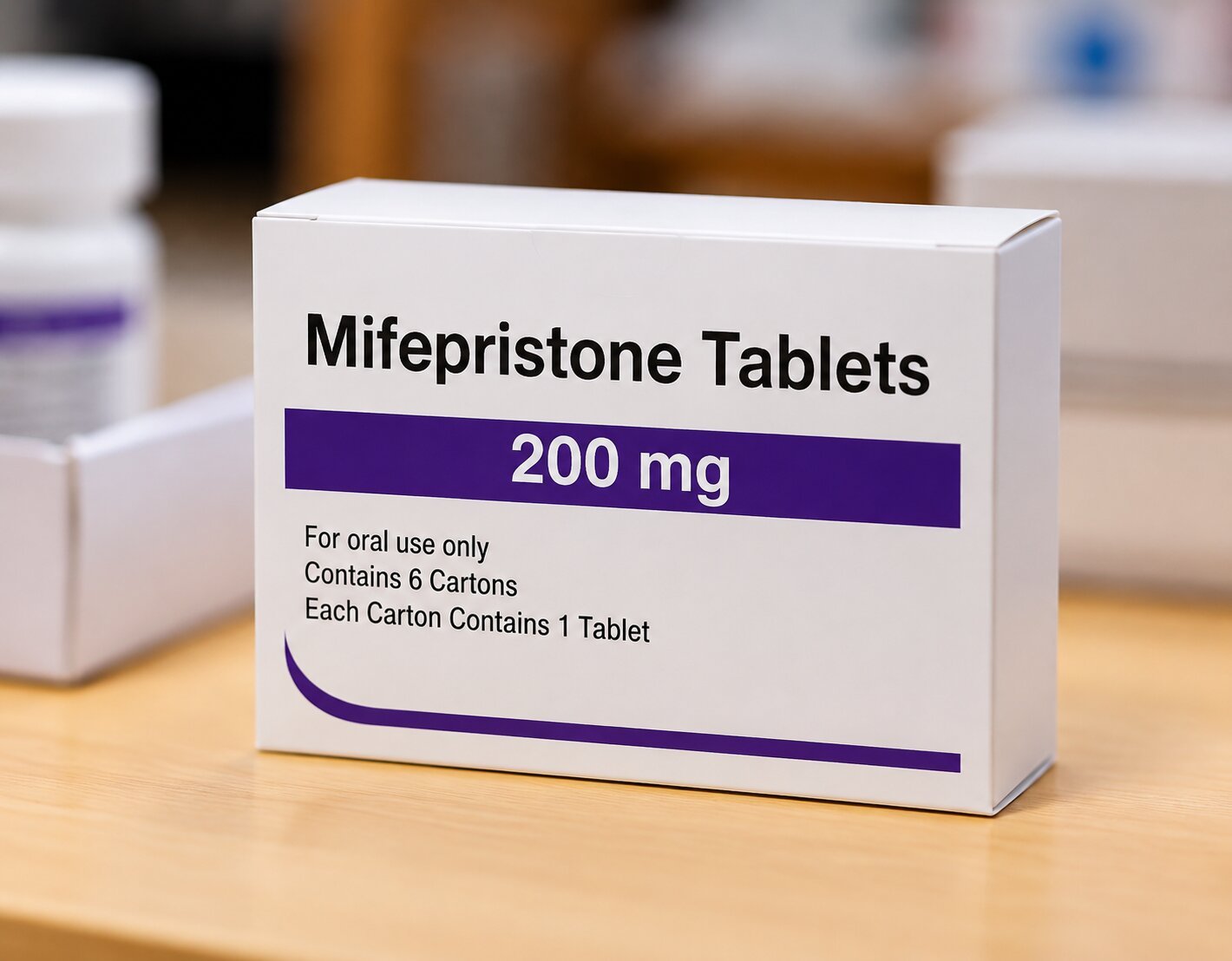
Mifepristone is a prescription medicine that blocks the hormone progesterone. Doctors classify it as an antiprogestogen. It is best known as the first medicine in a medication abortion, where it is used together with misoprostol.
It was first approved in France in 1988 and is now on the World Health Organization’s Model List of Essential Medicines, which lists the medicines a basic health system needs. It is sometimes known by its development code, RU-486.
How Does Mifepristone Work?
Progesterone keeps the lining of the uterus thick and supports a growing pregnancy. Mifepristone attaches to the body’s progesterone receptors and blocks them, so progesterone can no longer act.
1. Blocks progesterone
The hormone that sustains the pregnancy can no longer work.
2. Pregnancy stops developing
The lining breaks down and the pregnancy separates from the uterine wall.
3. Prepares the uterus
The cervix begins to soften and the uterus becomes more responsive to misoprostol.
Mifepristone on its own is much less effective at ending a pregnancy. Its main role is to prepare the body so that misoprostol works well.
Medical Uses of Mifepristone
- Medication abortion in early pregnancy, together with misoprostol
- Miscarriage management, to help the uterus empty after an early pregnancy loss
- Before some procedures, to soften the cervix
- Induction of labour after a pregnancy loss later in pregnancy
- Cushing’s syndrome, a hormone disorder, where a different product and regimen are used
Each use has its own regimen, chosen by the treating doctor.
How Mifepristone Is Given
In a medication abortion, mifepristone is usually taken first, often at a clinic, after a medical assessment confirms how far along the pregnancy is and rules out an ectopic pregnancy. Misoprostol follows after an interval set by the clinician, commonly 24–48 hours.
The strength, number of tablets and timing are decided by the prescribing clinician. Do not change a prescribed regimen without medical advice. For the full process, read what happens step by step.
The second medicine in a medication abortion: what it does and its side effects.
Side Effects of Mifepristone
Most people feel little or nothing after mifepristone itself. The strong cramping and heavy bleeding of a medication abortion usually start after misoprostol.
Possible after mifepristone
- Nausea
- Light bleeding or spotting
- Mild cramping
- Headache or tiredness
Rare but serious
- Allergic reaction: rash, swelling of the face or throat, difficulty breathing
- Heavy bleeding before misoprostol is taken
For the full list of side effects and warning signs, read abortion pill side effects and safety.
Who Should Not Take Mifepristone?
A clinician should assess you first. Mifepristone is generally not suitable if you:
- Have a confirmed or suspected ectopic pregnancy
- Have chronic adrenal failure or take long-term corticosteroids
- Have a bleeding disorder or take blood-thinning medicines
- Have inherited porphyria
- Have an IUD in place (it must be removed first)
- Have had an allergic reaction to mifepristone
Tell your clinician about every medicine you take, including herbal products. Some medicines, such as certain antifungals and anticonvulsants, can change how mifepristone works.
Mifepristone vs Misoprostol
| Mifepristone | Misoprostol | |
|---|---|---|
| Type | Antiprogestogen | Prostaglandin analogue |
| What it does | Blocks progesterone; stops the pregnancy developing | Softens the cervix and makes the uterus contract |
| Order | Taken first | Taken second, after an interval |
| How it feels | Usually little or nothing | Cramping and bleeding |
| Used alone? | Not for abortion | Sometimes, but less effective than combined |
| Other uses | Miscarriage, Cushing’s syndrome | Miscarriage, stomach ulcers, after-birth bleeding |
Mifepristone in Saudi Arabia
- Regulated medicine: mifepristone is regulated by the Saudi Food and Drug Authority (SFDA) and is not sold freely in pharmacies.
- Restricted access: abortion is generally permitted only for medical reasons through authorized healthcare channels. See our legal overview.
- Counterfeit risk: mifepristone sold online or through WhatsApp is often fake or the wrong strength. See how to spot fake pills.
- Getting care in Riyadh: speak to a licensed doctor at an MOH hospital or authorized clinic, or call the MOH helpline on 937. For emergencies, call 997.
Frequently Asked Questions
What is mifepristone?
Mifepristone is a prescription medicine that blocks the hormone progesterone. It is used with misoprostol to end an early pregnancy and to manage some miscarriages.
What does mifepristone do?
It stops progesterone from supporting the pregnancy, so the pregnancy stops developing and separates from the uterine lining. It also makes the uterus more responsive to misoprostol.
Can mifepristone be used alone?
For ending a pregnancy, mifepristone is used together with misoprostol. On its own it is much less effective.
What are the side effects of mifepristone?
Most people feel little after mifepristone itself. Some have nausea, light bleeding, headache or tiredness. Stronger cramping and bleeding come after misoprostol.
Is mifepristone available in Saudi Arabia?
Mifepristone is a regulated medicine and is not sold freely. Abortion is generally permitted only for medical reasons through authorized healthcare channels.
The second medicine in a medication abortion: what it does and its side effects.
References
- World Health Organization: Abortion Care Guideline
- WHO Model List of Essential Medicines
- ACOG: Induced Abortion
- MedlinePlus: Mifepristone
Medical disclaimer: This page is for general education only and does not replace advice from a qualified healthcare professional. Read how we review content in our medical review policy and editorial policy. It does not give dosing instructions. If you have severe symptoms, seek emergency care immediately.