Medically reviewed by Dr. Bhimi Daimari, MBBS, MS (Obstetrics and Gynaecology) · Review date: 14 November 2026
An upset stomach around the time your period is due can leave you wondering if you are pregnant. Here is what diarrhea can and cannot tell you, how to look after yourself, and the warning signs that need a doctor.
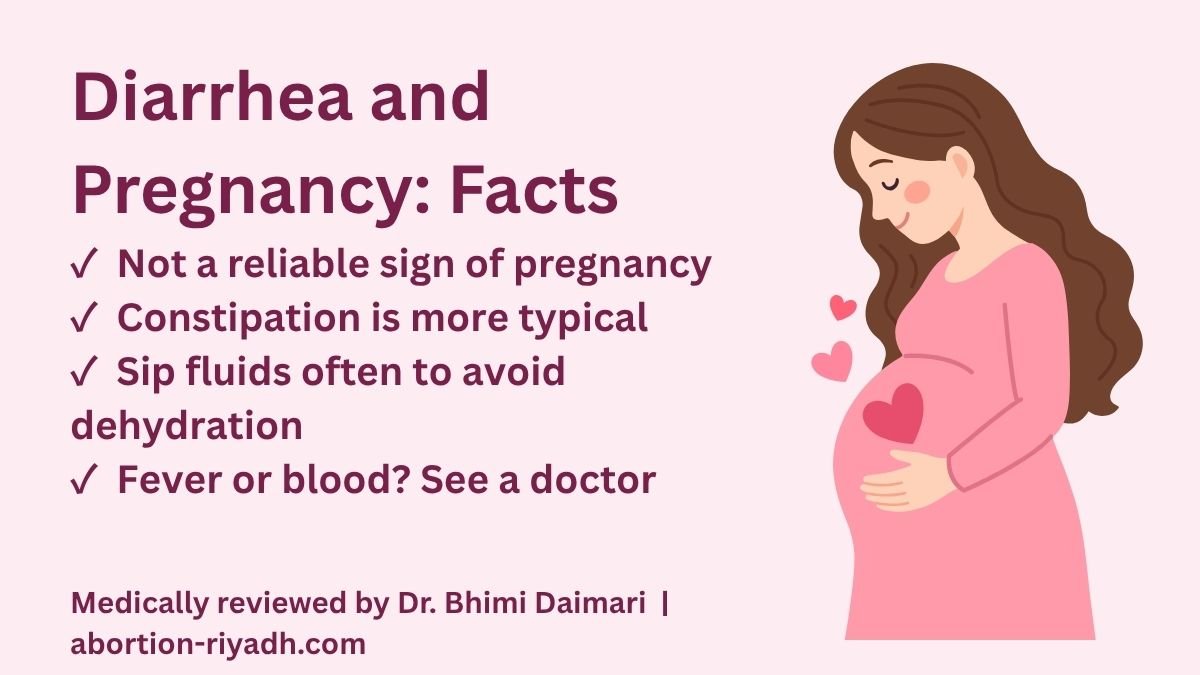
Quick answer: Diarrhea is not a reliable sign of pregnancy. Early pregnancy hormones usually slow the gut, so constipation is more typical. A missed period and a pregnancy test at the right time are what give you an answer.
Is diarrhea a sign of pregnancy?
Not a reliable one. Diarrhea is not on the standard lists of early pregnancy symptoms, and on its own it tells you very little about whether you have conceived.
Early pregnancy tends to push the gut the other way. The hormone progesterone rises after ovulation and stays high if you are pregnant. Progesterone relaxes the muscle in the bowel wall, so food moves through more slowly. That is why constipation, bloating and gas are the typical digestive complaints of the first weeks, not loose stools.
Some pregnant people do get diarrhea early on. When that happens, the cause is usually something that sits alongside the pregnancy, such as a stomach bug, a change in diet or a new supplement. The signs that point to pregnancy much more strongly are a missed period, sore or fuller breasts, nausea, tiredness and needing to pee more often.
If you had unprotected sex and your stomach is upset, the only way to know is a test taken at the right time. Loose stools in the first days after sex cannot be a pregnancy symptom at all, because the body has not started making pregnancy hormone yet. Our guide to the first 72 hours of pregnancy symptoms explains that timeline.
Why some people get diarrhea in early pregnancy
Doctors define diarrhea as three or more loose or watery stools in a day. In pregnancy the causes are mostly the same as at any other time, with a few extras.
- A stomach bug or food poisoning: viral gastroenteritis is the most common reason for a sudden bout of diarrhea, pregnant or not. It often comes with vomiting, cramps and sometimes a mild fever.
- Diet changes: many people start eating more fruit, vegetables, whole grains and dairy as soon as they see a positive test. A quick jump in fibre or milk can loosen the stools for a week or two.
- Prenatal vitamins: iron usually causes constipation, but some people get loose stools or an upset stomach from a new supplement, especially one that contains magnesium. Do not stop your vitamins on your own. Ask your doctor or pharmacist about a different formula or taking it with food.
- New food sensitivities: foods you used to tolerate, such as milk, fatty meals, spicy dishes or sugar-free sweets, may suddenly disagree with you.
- Hormone shifts: hormones affect people differently. A minority find their bowel becomes more active, not slower, particularly when nausea changes what and when they eat.
- Stress and worry: anxiety about a possible pregnancy can speed up the gut all by itself.
- Existing bowel conditions: irritable bowel syndrome, inflammatory bowel disease, coeliac disease and thyroid problems can flare or change during pregnancy.
- Medicines: antibiotics and some antacids are well-known causes.
Most of these settle within a couple of days and do not harm the pregnancy. Mild cramping in early pregnancy is common too, so an upset stomach with light cramps is usually not a sign that something is wrong.
Diarrhea before your period vs early pregnancy
This is the comparison most people are really asking about. Loose stools in the days around a period are very common, and they have a clear cause.
Just before a period, the lining of the uterus releases chemicals called prostaglandins. They make the uterus contract so it can shed its lining, which is what causes period cramps. Prostaglandins also act on the bowel next door and make it contract more. At the same time progesterone drops, so the brake it was putting on the gut comes off. The result is looser, more frequent stools, often called “period poops”.
In early pregnancy the opposite happens. Progesterone stays high, the lining is not shed and that surge of prostaglandins does not arrive. So diarrhea that turns up a day or two before your period is due, with familiar cramps, points more towards a period than a pregnancy.
| Feature | Before a period | Early pregnancy | Stomach bug or food poisoning |
|---|---|---|---|
| Typical bowel pattern | Looser, more frequent stools | Constipation, bloating and gas | Sudden watery diarrhea, often many times a day |
| Main driver | Prostaglandins rise and progesterone falls | Progesterone stays high and slows the gut | Virus, bacteria or toxin in food or water |
| Timing | A day or two before bleeding and the first days of the period | Comes and goes over weeks | Starts within hours to a few days of exposure |
| What comes with it | Period cramps, low backache, then bleeding | Missed period, sore breasts, nausea, tiredness | Vomiting, fever, cramps, others around you ill |
| How it ends | Eases as the period gets going | Usually improves with fluids, fibre and time | Usually clears in a few days |
The overlap is real, and no table can tell you for certain. Other early changes can be just as confusing, such as discharge, which we compare in discharge before a period vs early pregnancy.
When to take a pregnancy test
If your period is late, test. A home urine test is most reliable from the first day of a missed period. If your cycles are irregular or you are not sure when your period is due, test at least 21 days after the last time you had unprotected sex.
Testing earlier often gives a negative result even when you are pregnant, because the level of pregnancy hormone (hCG) in urine is still too low. If the result is negative and your period still has not come, repeat the test after a few days.
Heavy diarrhea will not change a pregnancy test. If you are drinking a lot to replace fluids, though, your urine may be very dilute, so use the first urine of the morning. Our step-by-step guide on how to use a pregnancy test kit covers timing and reading the result.
How to look after yourself: fluids come first
The main risk of diarrhea, in pregnancy or out of it, is losing more water and salts than you take in. Most short bouts can be managed at home.
- Drink little and often: take small sips of water through the day. Add an oral rehydration solution from a pharmacy if the stools are watery or frequent, because it replaces salts as well as water.
- Check your urine: pale yellow urine every few hours means you are keeping up. Dark urine or hardly passing any means you need more fluid.
- Eat when you feel able: you do not need to starve the gut. Plain foods such as rice, bananas, toast, potatoes, yoghurt, soup and boiled eggs are easy to tolerate.
- Go easy on triggers for a few days: very fatty or spicy food, a lot of fruit juice, caffeine and sugar-free sweets can keep the diarrhea going.
- Wash your hands well: soap and water after the toilet and before handling food protects the people you live with.
- Rest: your body is using energy to fight an infection, if that is the cause.
Be careful with medicines. Not every anti-diarrhea medicine or herbal remedy is suitable in pregnancy, and some are better avoided when there is fever or blood in the stool. If you are pregnant or might be, ask a doctor or pharmacist before you take anything.
Food safety matters more in pregnancy. Infections such as listeria and salmonella are more likely to cause serious illness when you are pregnant. Avoid unpasteurised milk and cheese, undercooked meat, poultry and eggs, and food that has sat out for hours, and wash raw fruit and vegetables well.
When diarrhea in pregnancy needs a doctor
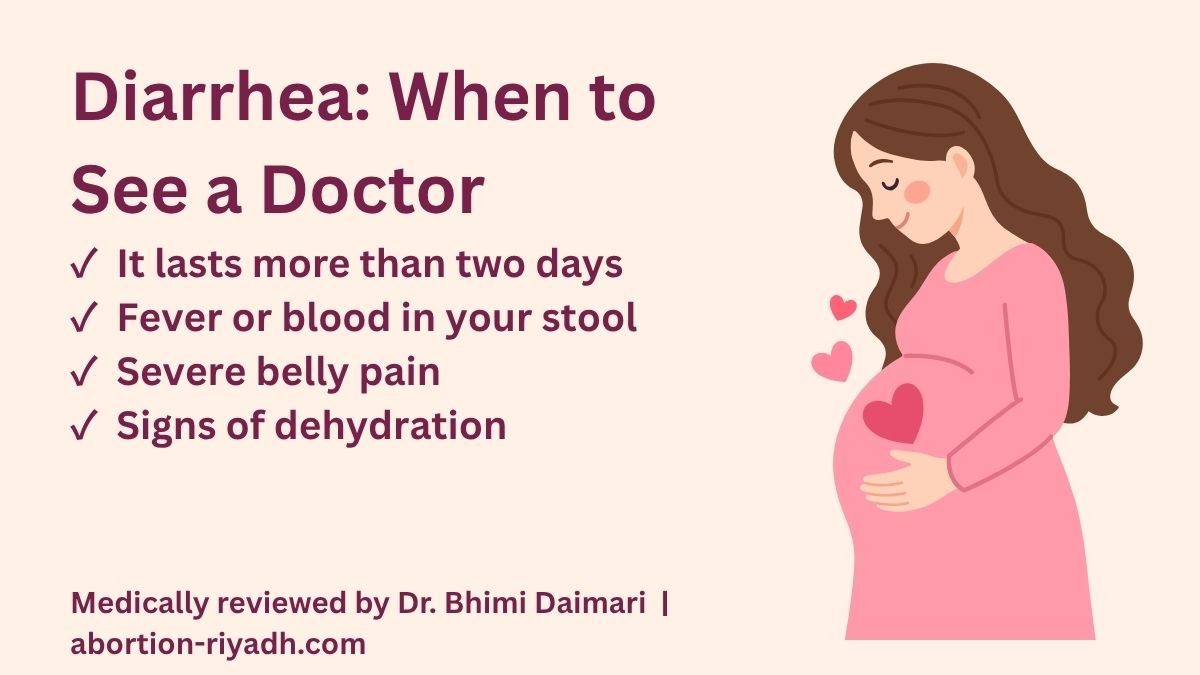
A day or two of loose stools with no other symptoms is rarely a problem. Dehydration, a high temperature and blood are the three things that change that.
Get medical help the same day, or call your local emergency number (997 in Saudi Arabia, 911 in the US) if symptoms are severe: diarrhea that lasts more than two days; a fever of 38°C (100.4°F) or higher; blood, mucus or black stools; severe or constant belly pain; signs of dehydration such as very dark urine, passing almost no urine, a dry mouth, dizziness, a racing heart or confusion; vomiting so much that you cannot keep fluids down; vaginal bleeding; regular tightenings or cramps before 37 weeks; or your baby moving less than usual.
Tell the doctor that you are pregnant or might be, what you have eaten recently and whether you have travelled. A fever with diarrhea in pregnancy always deserves a call, because a few food-borne infections can affect the baby even when the mother feels only mildly ill.
Diarrhea by itself does not cause miscarriage. Bleeding with strong cramps is a different matter and should be checked. You can read what to look for in signs of a miscarriage and how much bleeding is normal in early pregnancy.
Diarrhea in late pregnancy: is labour starting?
In the last weeks, some people notice looser stools a day or two before labour begins. One explanation is that the same prostaglandins that soften the cervix and start contractions also stimulate the bowel.
It is a weak clue. Plenty of people have loose stools near their due date and do not go into labour for days or weeks, and plenty go into labour with no bowel change at all. Diarrhea is not listed among the main signs of labour by bodies such as ACOG and the NHS.
The signs that carry real weight are:
- contractions that become regular, stronger and closer together and do not ease with rest;
- a “show”, which is a plug of mucus that may be streaked with blood;
- your waters breaking, as a gush or a steady trickle;
- low backache or period-like pain that keeps building.
If you have diarrhea together with any of these before 37 weeks, contact your maternity unit straight away, because it may be preterm labour. After 37 weeks, follow the plan your doctor or midwife gave you for when to come in.
Whatever the week, keep drinking. Dehydration can bring on tightenings of the uterus and make you feel much worse than the diarrhea itself.
Frequently Asked Questions
Can diarrhea be the first sign of pregnancy before a missed period?
It is unlikely. Before a missed period, loose stools are far more often caused by the hormone changes that come before a period, a stomach bug or something you ate. If your period does not arrive, take a pregnancy test.
How soon after conception can stomach problems start?
Pregnancy hormone is only produced after the embryo implants, which happens about 6 to 12 days after ovulation. Digestive symptoms caused by pregnancy, mainly nausea, bloating and constipation, usually start around weeks 4 to 6. Anything you feel in the first few days after sex has another cause.
Is it normal to have diarrhea at 5 or 6 weeks pregnant?
A short episode is common and usually harmless. It is most often due to a diet change, a new supplement or a mild infection. See a doctor if it lasts more than two days or comes with fever, blood or signs of dehydration.
Can diarrhea cause a miscarriage?
Ordinary diarrhea does not cause miscarriage. The straining and cramping are in the bowel, not the uterus. Severe dehydration and certain infections, such as listeria, can be risky in pregnancy, which is why fever or lasting symptoms should be checked.
Does diarrhea affect a pregnancy test result?
No. A home test measures hCG in your urine, and diarrhea does not change that. Drinking large amounts of fluid can dilute the urine, so test with your first urine of the morning.
Can diarrhea make birth control pills or the morning-after pill less effective?
Yes, it can. Severe diarrhea or vomiting may stop a pill from being absorbed properly. Read the leaflet that comes with your pill and ask a pharmacist or doctor whether you need extra protection or a repeat.
Is diarrhea in the third trimester a sign of labour?
It can come a day or two before labour, but it is not dependable. Many people have loose stools near term without labour starting. Regular contractions that get stronger, a bloody show and your waters breaking are the real signs.
What can I eat when I have diarrhea while pregnant?
Eat small amounts of plain food such as rice, bananas, toast, potatoes, yoghurt and soup, and keep sipping fluids. Avoid greasy, spicy and very sugary foods until the stools firm up. Return to your normal balanced diet as soon as you feel able.
Can prenatal vitamins give you diarrhea?
They can in some people, although constipation from iron is more usual. Taking the vitamin with food or at bedtime often helps. Ask your doctor or pharmacist before you switch or stop, because folic acid matters in early pregnancy.
Related guides
- First 72 hours of pregnancy symptoms
- Early pregnancy cramps
- Discharge before period vs early pregnancy
- How to use a pregnancy test kit
- Positive vs negative pregnancy test results
- Pelvic pain during pregnancy
Sources
- Mayo Clinic – Symptoms of pregnancy: What happens first
- MedlinePlus – Diarrhea
- NHS – Diarrhoea and vomiting
- ACOG – How to Tell When Labor Begins
- NHS – Signs that labour has begun
- NHS – Doing a pregnancy test
This page is general health information and does not replace advice from your own doctor. In an emergency, call your local emergency number (997 in Saudi Arabia, 911 in the US).