
Medically reviewed by Dr. Bhimi Daimari, MBBS, MS (Obstetrics and Gynaecology) · Review date: 7 November 2026
You notice a few drops of pink or brown blood a few days before your period is due, and the first question is: is this implantation bleeding, and will a pregnancy test be positive? This guide explains when implantation bleeding happens, why a test is often still negative during it, exactly when to test, and how to tell it apart from a period.
Quick answer: Usually not yet. Implantation bleeding happens when the pregnancy hormone hCG is only just starting to rise, so a home pregnancy test taken during the bleeding is often negative or very faint. For a reliable result, wait until the bleeding has stopped and your period is late (or at least 3 days after the spotting), and test with first-morning urine. A blood test can detect pregnancy a few days earlier. If you already know you are pregnant and are bleeding, read how much bleeding is normal in early pregnancy.
What Is Implantation Bleeding?
About a week after an egg is fertilised, the tiny embryo attaches to (implants into) the lining of the womb. This can disturb small blood vessels in the lining and cause a little light spotting. That spotting is called implantation bleeding.
It is harmless and does not affect the pregnancy. But it is also not universal: Cleveland Clinic estimates that only about 1 in 4 pregnant women notice it, so many pregnancies start with no bleeding at all.
When Does Implantation Bleeding Happen?
In a large study of naturally conceived pregnancies, implantation happened 6 to 12 days after ovulation, most often on days 8 to 10. That is why implantation spotting usually appears a few days before (or around) the date your next period is due.
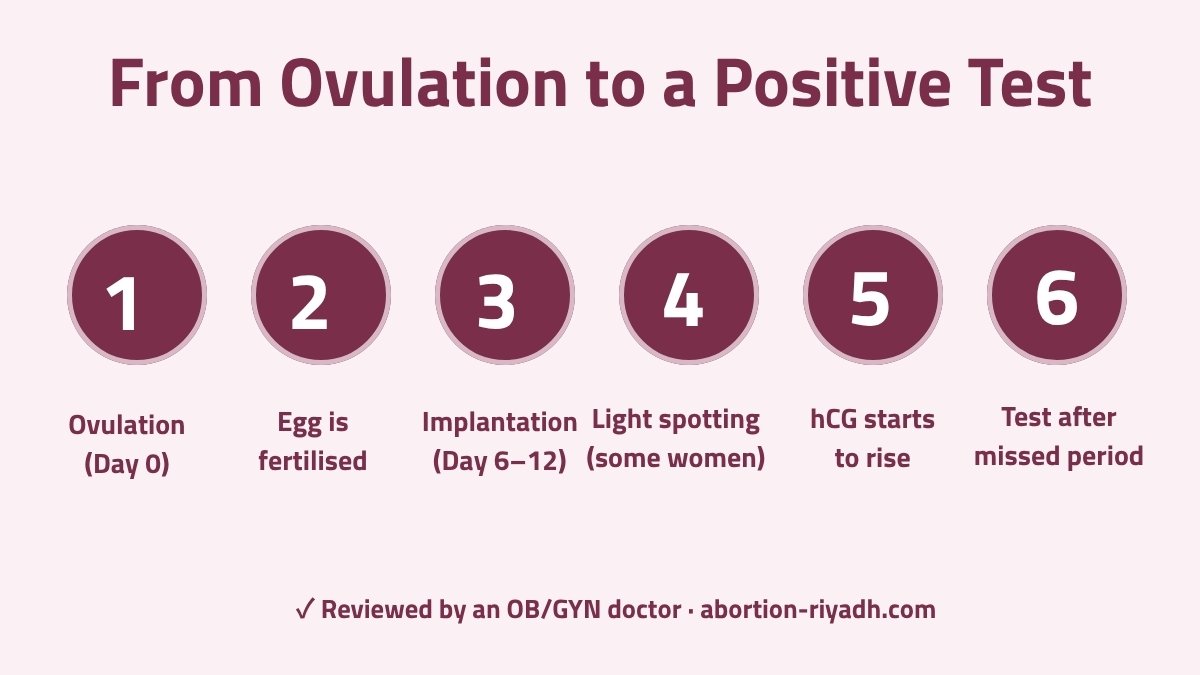
| Time after ovulation | What is happening | Will a home test be positive? |
|---|---|---|
| Day 0–1 | Ovulation and fertilisation | No |
| Day 6–12 (most often 8–10) | Implantation; light spotting in some women | No – hCG has only just started |
| 2–3 days after implantation | hCG starts to appear in blood, then urine | Maybe a very faint line on sensitive tests |
| Day 14 onwards (day of missed period) | hCG roughly doubles every 2–3 days | Usually yes – the most reliable time to test |
If I Have Implantation Bleeding, Will a Pregnancy Test Be Positive?
Not always, and often not on the same day. Home pregnancy tests detect hCG, a hormone made by the placenta only after implantation. On the day of implantation spotting, hCG is just beginning to be produced, so there may not be enough in your urine to turn the test positive yet.
What usually happens:
- During the spotting: negative or a very faint line is common, even if you are pregnant.
- 2–3 days later: a faint line may appear on a sensitive test. Read our guide to a faint line on a pregnancy test.
- By the day your period is late: most tests will be clearly positive if you are pregnant.
So a negative test during implantation bleeding does not rule out pregnancy – it may simply be too early.
How Long After Implantation Bleeding Should I Test?
- Best: wait until your period is at least 1 day late. Accuracy is highest from this point.
- If you can’t wait: test at least 3 days after the spotting started, using a sensitive early test.
- Use first-morning urine, when hCG is most concentrated, and follow the instructions exactly. See how to use a pregnancy test kit correctly.
- If the result is negative but your period still hasn’t come, test again in 2–3 days.
- A blood (serum) hCG test at a clinic can detect pregnancy a few days earlier than urine tests. Learn more about hCG levels by week.
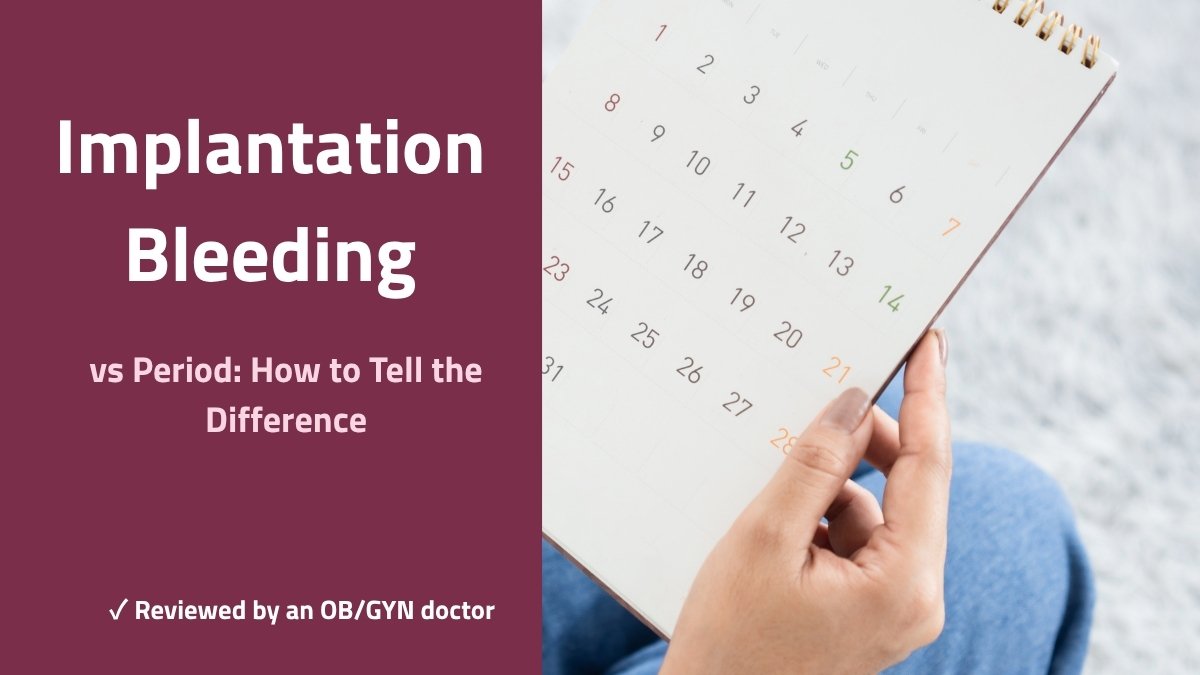
Implantation Bleeding vs Period: How to Tell the Difference
| Implantation bleeding | Period | |
|---|---|---|
| Timing | A few days before the period is due | On or around the expected date |
| Colour | Light pink or brown | Starts bright or dark red |
| Amount | Spotting – a panty liner is enough; does not soak a pad | Gets heavier; needs pads or tampons |
| Duration | A few hours to 1–2 days (up to 3) | Usually 3–7 days |
| Clots | No | Can have small clots |
| Cramps | None or very mild | Often stronger, especially on day 1–2 |
| Pattern | Stays light and stops | Builds up, then tapers off |
Important: these are typical patterns, not rules. Some light periods look like spotting, and some women have early pregnancy bleeding that is heavier. The only way to know is a pregnancy test at the right time.
What Does Implantation Bleeding Look Like?
- A few drops or light streaks of pink or brown blood, often noticed when wiping.
- Sometimes mixed with normal discharge, so it looks pinkish or brownish discharge. Compare with early pregnancy discharge.
- No clots, no tissue, and not enough to fill a pad.
- May come with very mild cramping. See early pregnancy cramps.
Bleeding and a Test Result: What Should I Do?
| Your situation | What it may mean | What to do |
|---|---|---|
| Spotting, test negative, period not due yet | Too early to tell | Test again when your period is late |
| Spotting stopped, period late, test positive | Likely early pregnancy; spotting may have been implantation | Book an antenatal appointment |
| Light bleeding, test negative 2 times after a missed period | Probably not pregnant; cycle may be irregular | See a doctor if periods stay irregular |
| Positive test, then bleeding that gets heavier | Needs checking (possible miscarriage or other cause) | Contact a doctor the same day |
| Positive test with one-sided pain, shoulder-tip pain or fainting | Possible ectopic pregnancy | Emergency – call 997 in Saudi Arabia |
To understand your result, read positive vs negative pregnancy test results.
Other Causes of Light Spotting Before a Period
Not all spotting is implantation bleeding. Other common causes include:
- Ovulation spotting around the middle of the cycle.
- Hormonal contraception (pills, implant, hormonal IUD), especially in the first months.
- Irritation of the cervix after sex or an internal examination.
- Hormone changes such as stress, thyroid problems or polycystic ovaries.
- Infection of the vagina or cervix (often with unusual discharge or smell).
- An early, light period.
In early pregnancy, bleeding can also be caused by a threatened miscarriage, a miscarriage or an ectopic pregnancy, so any bleeding with a positive test should be discussed with a doctor.
Not sure if it is implantation bleeding or just old blood? Our guide to brown discharge explains the common causes and the warning signs.
When to See a Doctor
Get urgent medical help (in Saudi Arabia call 997) if you have:
- Heavy bleeding – soaking a pad in an hour – or passing clots or tissue.
- Severe or one-sided lower tummy pain, or pain in the tip of the shoulder.
- Dizziness, fainting, a fast heartbeat or feeling very unwell.
- Fever or foul-smelling discharge.
Also see a doctor if spotting lasts more than 3 days, keeps coming back, or happens after sex. If you have had a pregnancy loss before, read what a miscarriage looks like so you know which signs need help.
Frequently Asked Questions
How do I know if it’s implantation bleeding?
You can’t be completely sure by looking, but implantation bleeding is usually: light pink or brown spotting, appearing a few days before your period is due (about 6–12 days after ovulation), lasting a few hours to 1–2 days, with no clots and only mild or no cramps. If the bleeding turns into a normal red flow, it is more likely your period. The only way to know is a pregnancy test once your period is late.
What are the 7 signs of implantation?
Signs women often notice around implantation are: 1) light spotting, 2) mild cramps, 3) sore or tender breasts, 4) tiredness, 5) mild nausea, 6) bloating, and 7) mood changes. However, all of these are also common before a period, and many pregnant women have none of them. So these signs cannot confirm pregnancy – only a test can.
How soon after implantation bleeding can you test positive?
If the spotting really was implantation, you are already pregnant, but hCG needs time to build up. A sensitive home test may turn positive about 3–4 days after implantation, and most tests are clearly positive by the day your period is late. A blood test can show it a little earlier.
Does implantation bleeding mean you are 100% pregnant?
No. Light spotting before a period can also be caused by hormone changes, contraception, ovulation, irritation of the cervix or an early light period. Only a positive pregnancy test (or blood hCG test) confirms pregnancy. Spotting with a negative test after a missed period usually means you are not pregnant.
Can you get a positive pregnancy test during implantation bleeding?
Sometimes, but often not yet. hCG only starts to be made after implantation, so on the day of the spotting there is usually too little in your urine. A negative or very faint result is common, with a clear positive a few days later. The bleeding itself does not make the test wrong – it is just too early.
If my test is negative, is it implantation bleeding or my period?
If the bleeding stays light, is pink or brown, stops within 1–2 days and no period follows, repeat the test after 2–3 days. If it becomes a normal red flow that lasts several days, it is most likely your period. Read our guide to positive vs negative test results.
What colour is implantation bleeding?
Usually light pink or brown, not bright red. It is often only noticed when wiping or as a few spots on underwear or a panty liner. We don’t show real photos of blood on this site – the colour, amount and timing described above are more useful than pictures, which vary a lot.
How long does implantation bleeding last?
Usually from a few hours to 1–2 days, and rarely up to 3 days. Bleeding that continues for longer, or gets heavier, is more likely a period or another cause and should be checked.
Can implantation bleeding be heavy or have clots?
No. Implantation bleeding is light spotting without clots. Heavy bleeding, soaking a pad, or passing clots is not typical of implantation and needs medical advice, especially if you have a positive test.
Can you have implantation bleeding right after your period?
Not usually. Implantation happens about 1 week before your next period is due, not just after a period ends. Spotting a few days after your period is more often leftover period blood, and spotting in the middle of the cycle may be ovulation spotting.
Does every pregnant woman get implantation bleeding?
No. Only about 1 in 4 women notice it. Most pregnancies start without any bleeding, so having no spotting does not mean you are not pregnant.
Sources
- Cleveland Clinic – Implantation Bleeding
- Wilcox AJ et al. Time of implantation of the conceptus and loss of pregnancy. N Engl J Med 1999
- ACOG – Bleeding During Pregnancy
- NHS – Doing a pregnancy test
Medical disclaimer: This article is for general education only. It does not replace advice, diagnosis or treatment from a qualified doctor.