

Medically reviewed by Dr. Bhimi Daimari, MBBS, MS (Obstetrics and Gynaecology) · Review date: 4 November 2026
Many women notice more discharge than usual and wonder: “Could this be an early sign of pregnancy?” The answer is sometimes yes but discharge on its own cannot tell you for sure. In this guide we explain what early pregnancy discharge looks like how it compares with discharge before a period what egg-white discharge means, and which colours or smells need a doctor.
Quick answer: Early pregnancy discharge is usually thin milky-white or clear and has little or no smell. It increases because of higher hormone levels and more blood flow to the vagina. It is normal, but it looks very similar to discharge before a period so the only reliable way to know if you are pregnant is a pregnancy test after a missed period.
What Does Early Pregnancy Discharge Look Like?
Normal pregnancy discharge is called leukorrhoea. According to the NHS, it is common to have more discharge in pregnancy. Healthy early pregnancy discharge is usually:
- Colour: clear or milky-white
- Texture: thin or slightly creamy, sometimes sticky
- Smell: mild or no smell
- Amount: more than usual, and it may slowly increase as pregnancy goes on
The extra discharge has a job: it helps protect the vagina and womb from infection.
When Does Discharge Start in Early Pregnancy?
Some women notice more discharge within the first few weeks after conception, sometimes even before a missed period. Others do not notice any change until later. Both are normal. Because every woman is different, discharge should never be used as a pregnancy test.
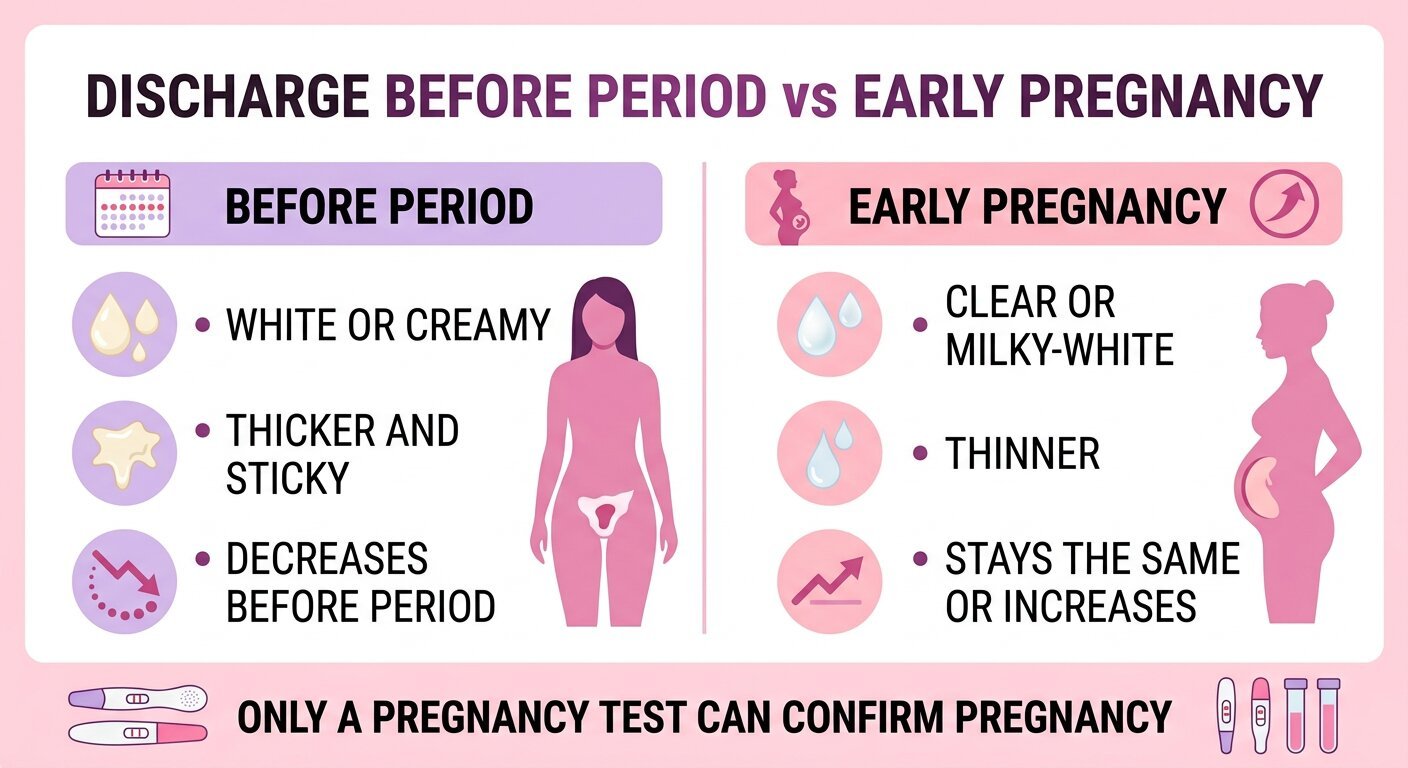
Discharge Before Period vs Early Pregnancy: What Is the Difference?
This is the most common question, and the honest answer is: it is very hard to tell them apart. Both can be white or creamy, because the hormone progesterone rises after ovulation whether you are pregnant or not.
| Before a period | Early pregnancy | |
|---|---|---|
| Colour | White, creamy or cloudy | Clear or milky-white |
| Texture | Often thicker and stickier | Often thinner, may be more watery |
| Amount | Usually decreases just before the period | Often stays the same or increases |
| What happens next | Period starts | Period is missed; pregnancy test turns positive |
If your period is late, take a home pregnancy test. Our guides explain how to use a pregnancy test kit and how to read positive vs negative pregnancy test results.
Early Pregnancy Egg-White Discharge: Does It Mean You Are Pregnant?
Clear, stretchy discharge that looks like raw egg white usually happens around ovulation, when the body is ready for pregnancy. It is a sign of fertility, not a sign of pregnancy. Some women do notice clear, slippery discharge in early pregnancy too, but it cannot confirm a pregnancy.
Video: Is Discharge During Pregnancy Normal?
This short video from the YouTube channel Diana In The Pink explains which types of discharge are normal in pregnancy and which changes are worth checking with a doctor.
Pink or Brown Discharge in Early Pregnancy
Light pink or brown spotting can happen in early pregnancy – for example, around the time a fertilised egg implants in the womb, or after a vaginal examination. Light spotting that stops on its own is often harmless. But any bleeding in pregnancy should be checked, because it can also be a sign of a threatened miscarriage or an ectopic pregnancy (ACOG).
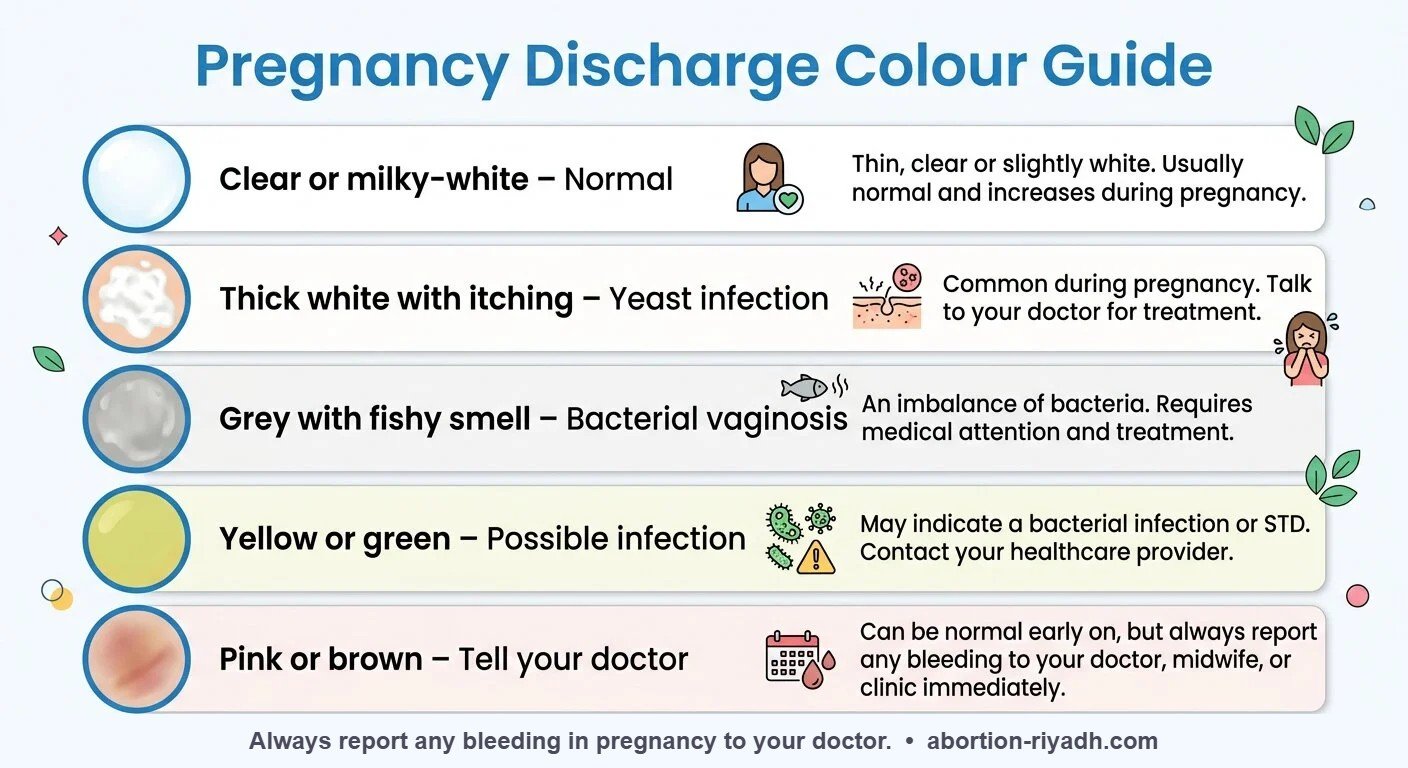
Discharge Colours and What They May Mean
| Discharge | What it may mean | What to do |
|---|---|---|
| Clear or milky-white, mild smell | Normal pregnancy discharge | Nothing – this is healthy |
| Thick, white, like cottage cheese, with itching | Yeast (thrush) infection | See a doctor or pharmacist – some treatments are not safe in pregnancy |
| Grey or white with a fishy smell | Bacterial vaginosis | See a doctor – it should be treated in pregnancy |
| Yellow or green, frothy, or with soreness | Possible infection, including sexually transmitted infections | See a doctor |
| Pink or brown spotting | Implantation spotting, cervix irritation, or a warning sign | Tell your doctor, especially if it continues |
| Red bleeding, with or without clots | Possible miscarriage or ectopic pregnancy | Get medical help the same day |
To understand the signs of pregnancy loss, read what a miscarriage looks like and miscarriage rates by week.
How to Stay Comfortable
- Wear cotton underwear and change it when damp.
- Use unscented panty liners if needed – not tampons.
- Wash the outside area with plain water; avoid perfumed soaps and sprays.
- Do not douche. It can upset the natural balance and increase infection risk.
Brown spotting outside pregnancy too? Read our full guide to brown discharge: causes, colours and when to worry.
When to See a Doctor
Contact a doctor if your discharge changes colour, smells bad, causes itching, soreness or burning, or if you have any bleeding. Go to the emergency department or call 997 in Saudi Arabia if you have heavy bleeding, severe or one-sided tummy pain, shoulder-tip pain, fever, or feel faint. For non-urgent advice, call the Ministry of Health on 937.
Also feeling cramps? Read our guide to early pregnancy cramps and pain areas – what is normal and when to worry.
Frequently Asked Questions
What does early pregnancy discharge look like?
It is usually thin, clear or milky-white, and has a mild smell or no smell. Many women simply notice more of it than usual.
Can discharge tell me I am pregnant before a missed period?
No. Discharge before a period and in early pregnancy look very similar. A pregnancy test after a missed period is the reliable way to know.
Is creamy white discharge a sign of pregnancy?
It can be, but creamy white discharge is also very common before a period. On its own, it does not confirm pregnancy.
Does egg-white discharge mean I am pregnant?
Usually not. Stretchy egg-white discharge is a sign of ovulation, when you are most fertile.
Is brown discharge normal in early pregnancy?
Light brown spotting can be harmless, but any bleeding in pregnancy should be checked by a doctor to rule out problems such as ectopic pregnancy.
When should I worry about discharge in pregnancy?
See a doctor if it is green, yellow, grey, smells bad, causes itching or burning, or if you have bleeding or pain.
What does 1 week of pregnancy discharge look like?
In the first week or two after conception, most women notice no change at all. If there is a change, the discharge may be slightly more than usual, thin, and clear or milky-white. Some women see light pink or brown spotting around the time of implantation. None of these signs can confirm pregnancy.
What colour is normal pregnancy discharge?
Normal pregnancy discharge is clear or milky-white, with a mild smell or no smell. Green, yellow or grey discharge, or discharge with a bad smell, should be checked by a doctor.
Is leukorrhoea normal during pregnancy?
Yes. Leukorrhoea is the medical name for the thin, milky-white discharge of pregnancy. It is normal and helps protect the vagina and womb from infection.
What week of pregnancy does leukorrhoea start?
It can start early in the first trimester, and some women notice it within the first few weeks. It usually increases as pregnancy goes on and is often heaviest near the end of pregnancy.
How does discharge look if you have conceived?
It usually looks like normal discharge: thin, clear or milky-white and mild-smelling, sometimes a little heavier than usual. Because it looks so similar to discharge before a period, it cannot tell you whether you have conceived.
What are the top 3 signs of early pregnancy?
The most common early signs are a missed period, nausea (with or without vomiting) and tender or swollen breasts. Tiredness and needing to pass urine more often are also common.
How can I 100% confirm pregnancy?
A home urine pregnancy test is very accurate when used after a missed period. A doctor can confirm pregnancy with a blood test for the hormone hCG and, a little later, with an ultrasound scan, which also checks where the pregnancy is growing.
Sources
- NHS – Vaginal discharge in pregnancy
- ACOG – Bleeding During Pregnancy
- Mayo Clinic – Symptoms of pregnancy: What happens first
Medical disclaimer: This article is for general education only. It does not replace advice, diagnosis or treatment from a qualified doctor.