

Key takeaways
- A threatened abortion is vaginal bleeding in the first 20 weeks of pregnancy with a closed cervix.
- It does not mean the pregnancy is lost. Many babies survive and are born healthy.
- About 1 in 4 pregnant women have some bleeding in the first trimester.
- There is no medicine that can stop every miscarriage, but monitoring and the right care help.
- Heavy bleeding, severe pain or fainting needs emergency care (call 997).
Emergency in Saudi Arabia: If you are pregnant and have heavy bleeding (soaking a pad within an hour), severe tummy pain, shoulder pain, or you feel faint, call 997 or go to the nearest emergency department. For advice, call the MOH helpline on 937.
What is a threatened abortion?
A threatened abortion, also called a threatened miscarriage, is vaginal bleeding in the first 20 weeks of pregnancy while the cervix stays closed and the pregnancy is still alive inside the womb. In medical language, “abortion” here means pregnancy loss, not a planned termination.
It is called “threatened” because there is a risk of miscarriage, but the miscarriage has not happened.
How common is a threatened miscarriage?
It is very common. According to the medical review Threatened Miscarriage (StatPearls), about 25% of pregnancies have some bleeding in the first trimester.
Threatened abortion vs miscarriage
| Threatened abortion | Miscarriage (pregnancy loss) | |
|---|---|---|
| Bleeding | Light to moderate | Often heavy, with clots or tissue |
| Cervix | Closed | Usually open |
| Baby’s heartbeat | Usually present | Absent |
| Outcome | Pregnancy can continue | Pregnancy has ended |
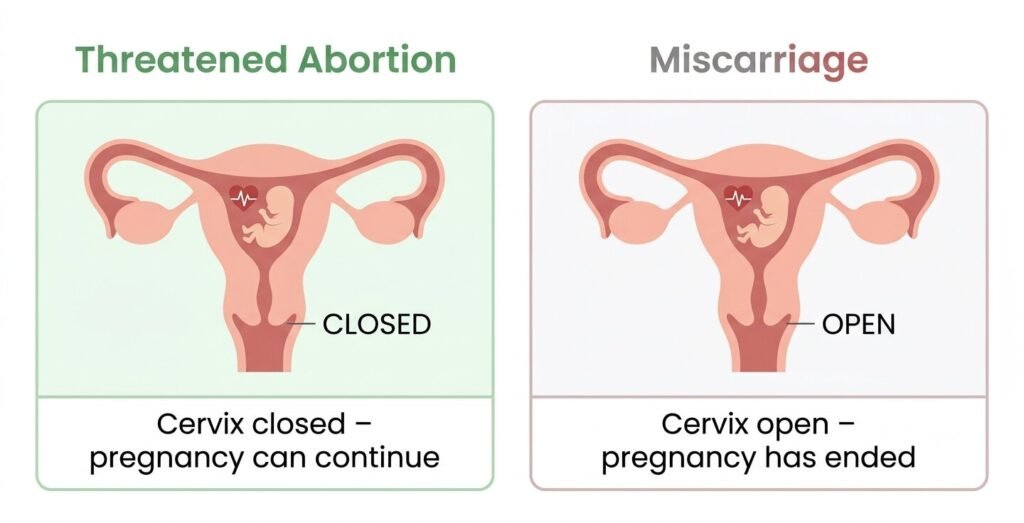
If the cervix opens, it becomes an inevitable abortion. Learn about all the types of abortion in our full guide, or read our miscarriage guide.
Symptoms of threatened abortion
Vaginal bleeding
Spotting or light bleeding. It may be pink, red or brown, and can last a few hours or a few days.
Abdominal pain or cramping
Mild cramps in the lower tummy, similar to period pain.
Lower back pain
A dull ache in the lower back.
Changes in pregnancy symptoms
Pregnancy symptoms such as nausea and breast tenderness usually continue. If they suddenly disappear, tell your doctor.
Causes of threatened abortion
Often no clear cause is found. Common reasons include:
Chromosomal abnormalities
Random genetic problems in the pregnancy are the most common cause of early pregnancy loss. They are not caused by anything the mother did.
Hormonal changes
Low progesterone, or thyroid problems.
Implantation and placental causes
Bleeding behind the pregnancy sac (a subchorionic haematoma), or bleeding as the pregnancy attaches to the womb.
Maternal medical conditions
Uncontrolled diabetes, thyroid disease, infections (urinary or vaginal), or problems with the shape of the womb or cervix.
Lifestyle and environmental factors
Smoking, alcohol, high caffeine intake, and some medicines taken without a doctor’s advice.
The NHS guide to vaginal bleeding in pregnancy also lists other causes of early bleeding, such as implantation bleeding, infection and ectopic pregnancy.
Risk factors for threatened abortion
- Age over 35
- Previous miscarriage
- Being overweight or underweight
- Smoking or alcohol use
- Diabetes or thyroid disease
- Infections during pregnancy
How is threatened abortion diagnosed?
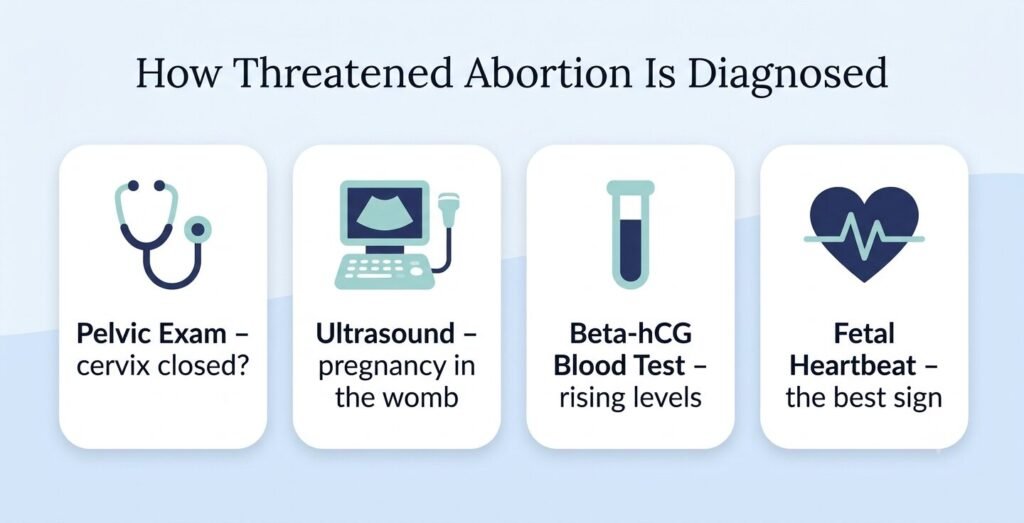
Medical history and physical examination
The doctor asks about your bleeding and pain, then gently examines you to check that the cervix is closed.
Ultrasound examination
A scan checks that the pregnancy is inside the womb (not ectopic) and how it is growing.
Beta-hCG blood test
The pregnancy hormone hCG is measured, sometimes twice, 48 hours apart. In a healthy early pregnancy it normally rises. Falling hCG levels can be a sign the pregnancy is not continuing.
Assessment of foetal heart activity
Seeing the baby’s heartbeat is the best sign. If it is too early to see one, the scan is repeated after 7–14 days.
If you are Rh-negative, you may need an anti-D injection.
Can the baby survive a threatened abortion?
Yes, very often. Around half of women with threatened miscarriage go on to have a healthy pregnancy. Chances are higher when:
- a heartbeat is seen on ultrasound
- the bleeding is light and stops
- the pregnancy is past 8–10 weeks
- the mother is under 35
Some studies show a slightly higher chance of later problems (such as early labour), so your doctor may offer extra check-ups.
Is threatened miscarriage dangerous?
For the mother, it is usually not dangerous if checked by a doctor. The danger is missing a serious cause, such as an ectopic pregnancy or heavy blood loss. That is why every bleed in pregnancy needs a medical check.
Threatened abortion management and treatment
There is no medicine that can stop a miscarriage caused by chromosome problems. Management in the first trimester focuses on monitoring and support.
Medical monitoring
Follow-up scans and hCG tests to check that the pregnancy is growing.
Activity modifications
- Rest when you feel tired. Strict bed rest has not been shown to prevent miscarriage.
- Avoid heavy lifting and hard exercise until the bleeding stops.
- Avoid sex and tampons until your doctor says it is safe. Use pads so you can see how much you are bleeding.
Progesterone support
In some women, especially those who have miscarried before, a doctor may prescribe progesterone. Use it only with a doctor’s prescription. Never take hormones or other pills on your own.
Treating the cause
Treating an infection, a thyroid problem or diabetes, if found.
Can you prevent a threatened miscarriage?
Most cannot be prevented, because the cause is often chromosomal. You can lower your risk:
- Take folic acid before and during early pregnancy.
- Don’t smoke, avoid alcohol, and limit caffeine.
- Keep diabetes and thyroid problems under control.
- Go to all your antenatal check-ups.
- Never take medicines without a doctor’s advice.
Can stress increase the risk of miscarriage?
Normal daily stress has not been proven to cause miscarriage. Severe, long-term stress is not good for your health, so rest, eat well and ask for support. A miscarriage is not your fault.
When should you see a doctor?
See a doctor the same day for any bleeding in pregnancy. Go to the emergency department or call 997 if you have:
- bleeding that soaks a pad in an hour
- severe pain, especially on one side
- shoulder-tip pain, dizziness or fainting
- fever or bad-smelling discharge
- passing clots or tissue
Frequently Asked Questions
Can a baby survive a threatened abortion?
Yes. Around half of women with a threatened miscarriage go on to have a healthy baby. The chances are best when a heartbeat is seen on ultrasound and the bleeding is light.
What are the symptoms of a threatened miscarriage?
Light vaginal bleeding or spotting, mild cramps, and lower back pain, while the cervix stays closed and pregnancy symptoms continue.
How long does a threatened miscarriage last?
Bleeding usually settles within a few days to 1–2 weeks. If it becomes heavy or painful, see a doctor the same day.
Do hCG levels drop with threatened miscarriage?
In a pregnancy that continues, hCG usually keeps rising. Falling hCG levels may mean the pregnancy is not continuing. Your doctor will compare two blood tests taken 48 hours apart.
Can stress increase the risk of miscarriage?
Normal daily stress has not been proven to cause miscarriage. Most miscarriages are caused by chromosome problems that nobody could prevent.
What are the common symptoms 2 weeks after an abortion or miscarriage?
Light bleeding or spotting, mild cramps, tiredness and mood changes are common. Fever, heavy bleeding or bad-smelling discharge need a doctor. Read more about your period after abortion and emotional health after abortion.
References
- Threatened Miscarriage, StatPearls (PubMed)
- Early Pregnancy Loss (Spontaneous Abortion), StatPearls, NCBI Bookshelf
- Vaginal bleeding in pregnancy, NHS
About the medical reviewer
Dr. Bhimi Daimari, MS (Obstetrics & Gynaecology)
Dr. Bhimi Daimari is a gynaecologist with an MS in Obstetrics and Gynaecology from Fakhruddin Ali Ahmed Medical College, Barpeta (Srimanta Sankaradeva University of Health Sciences). She is registered with the Assam Council of Medical Registration (Reg. No. 23218). She reviews all medical content on Abortion Riyadh for accuracy and safety.
Email: daimaribhimi@gmail.com
Medically reviewed by Dr. Bhimi Daimari, MS (Obstetrics & Gynaecology)
MS Obstetrics & Gynaecology · Reg. No. 23218, Assam Council of Medical Registration · Last reviewed: 30 October 2026
Disclaimer: This article is for education only and is not a substitute for medical advice. If you are pregnant and bleeding, see a licensed doctor at an authorized facility in Saudi Arabia, or call 997 in an emergency.