
Medically reviewed by Dr. Bhimi Daimari, MBBS, MS (Obstetrics and Gynaecology) · Review date: 14 November 2026
Pain in the pelvis can make walking, sleeping and even turning over in bed hard work. This guide explains the common causes at each stage of pregnancy, what SPD is and how it is treated, and which symptoms mean you should be seen urgently.
Quick answer: Most pelvic pain in pregnancy is harmless and treatable. Pelvic girdle pain (SPD) affects about 1 in 5 pregnant women and improves with physiotherapy. Severe, constant or one-sided pain, or pain with bleeding, needs urgent assessment.
Is pelvic pain normal during pregnancy?
Often, yes. Aches, twinges and pressure in the pelvis are among the most common complaints of pregnancy, and most have a harmless cause such as stretching ligaments, a busy bowel or strained pelvic joints.
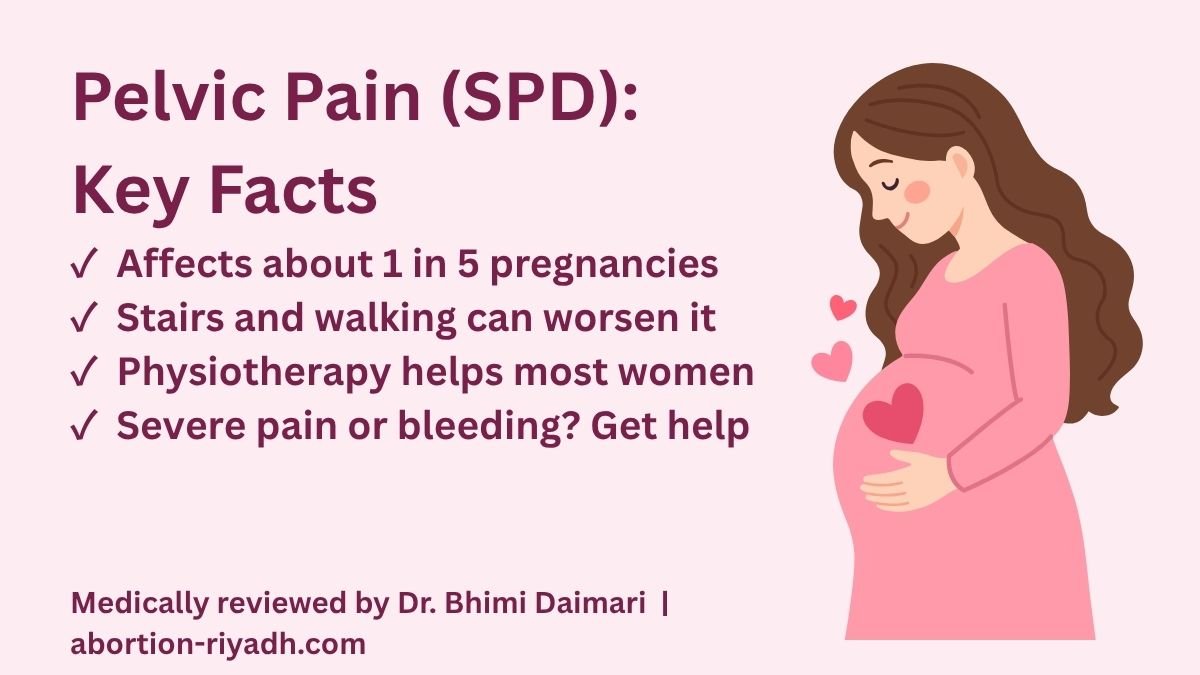
“Common” does not mean you have to put up with it. Pain from the pelvic joints, known as pelvic girdle pain (PGP) or symphysis pubis dysfunction (SPD), affects around 1 in 5 pregnant women according to the RCOG. It responds well to treatment, and it is easier to manage the earlier you ask for help.
A small share of pelvic pain comes from conditions that need urgent care. The pattern of the pain, the week of pregnancy and the symptoms that come with it usually point to the cause. This guide walks through each of them.
Common causes of pelvic pain by trimester
The likely explanation changes as pregnancy goes on.
| Cause | When it is most common | What it feels like | What usually helps |
|---|---|---|---|
| Early pregnancy cramps | First trimester | Mild, period-like aching low in the middle that comes and goes | Rest, fluids, a change of position |
| Constipation and gas | Any time, often from the first trimester | Crampy pain and bloating that eases after opening your bowels | Fluids, fibre, walking |
| Urinary tract infection | Any time | Pressure above the pubic bone, burning when you pee, peeing often | A urine test and treatment from your doctor |
| Round ligament pain | Second trimester | A sharp, brief stab in the lower belly or groin with sudden movement | Slow movements, rest, a support belt |
| Pelvic girdle pain (PGP/SPD) | Second and third trimesters; can start earlier | Pain over the pubic bone, hips, lower back or between the legs, worse with walking, stairs and turning in bed | Physiotherapy, adapted activity, a support belt |
| Braxton Hicks contractions | From mid-pregnancy, more in the third trimester | The whole bump tightens for under a minute; irregular and usually painless | Rest, a drink of water, a change of position |
| Pressure from the baby’s head | Last weeks | Heaviness or pressure deep in the pelvis, sudden shooting pains in the vagina | Rest, changing position, a support belt |
Two of these have their own guides on this site: early pregnancy cramps and round ligament pain in pregnancy. The rest of this article concentrates on pelvic girdle pain and on the serious causes you should not miss.
What is SPD (pelvic girdle pain)?
Your pelvis is a ring of bones joined at three points: the symphysis pubis at the front, where the two pubic bones meet, and the two sacroiliac joints at the back, on either side of the base of the spine. Normally these joints move very little.
Pelvic girdle pain is pain in any of these joints during pregnancy. Symphysis pubis dysfunction is the older name, used when the pain is mainly at the front. Doctors and physiotherapists now prefer “pelvic girdle pain” because the back joints are often involved as well.
Typical symptoms are:
- pain over the pubic bone at the front, roughly level with your hips;
- pain across one or both sides of the lower back or deep in the buttocks;
- pain in the perineum, the area between the vagina and the anus, or down the inner thighs;
- a clicking or grinding feeling in the pelvis;
- pain that is worse when you walk, climb stairs, stand on one leg (for example to put on trousers), part your legs to get out of a car, or turn over in bed.
The pain ranges from a nuisance to severe enough to make walking difficult. It can start at any stage, but it is most common from the middle of pregnancy, about the time your bump starts to show and your centre of gravity shifts. PGP does not harm your baby.
Why does it happen?
PGP is thought to come from the pelvic joints moving unevenly, or one joint becoming stiff, so that the ring is less stable and the surrounding tissues get irritated. Several things contribute:
- Hormones: relaxin and progesterone soften the ligaments of the pelvis to prepare for birth. This is normal, and hormone levels alone do not explain who gets pain, but looser ligaments mean the muscles have to work harder to keep the joints steady.
- Posture and load: the growing bump pulls your weight forward, the lower back arches and the way you walk changes.
- Muscle changes: the abdominal, buttock and pelvic floor muscles stretch and may support the pelvis less well.
- The baby’s weight and position later in pregnancy.
You are more likely to develop PGP if you have had back or pelvic pain before, a past injury to the pelvis, PGP in an earlier pregnancy, very flexible joints, a physically demanding job or a higher body weight.
Self-care that helps
Small changes to how you move take strain off the joints. The principle is to keep your legs moving together and avoid positions that hurt.
- Stay active within your pain limits. Rest when you need to, but avoid long spells in bed. Short, frequent walks are better than one long one.
- Keep your knees together when you get in and out of the car or turn in bed. Sitting on a plastic bag on the car seat can help you swivel.
- Sit down to get dressed so you are not balancing on one leg.
- Sleep on your side with a pillow between your knees and ankles, and another under your bump.
- Take stairs one at a time, leading upstairs with the less painful leg.
- Avoid heavy lifting, carrying a toddler on one hip, pushing a heavy shopping trolley, sitting cross-legged and sitting on the floor.
- Wear flat, supportive shoes and take smaller steps.
- Ask for and accept help with housework and lifting.
For pain relief, speak to your doctor about which medicines are suitable for you in pregnancy. Do not start painkillers on your own.
Physiotherapy, support belts and giving birth
If pelvic pain is affecting your walking, sleep or work, ask your doctor or midwife to refer you to a physiotherapist with experience in pregnancy. Early treatment tends to give the best results.
Physiotherapy may include:
- an assessment of how your pelvic joints and spine are moving;
- gentle hands-on treatment to help the joints move more evenly;
- exercises to strengthen the deep abdominal, buttock, back and pelvic floor muscles;
- exercise in water, which many people find comfortable;
- advice on posture, lifting, work and sleeping positions;
- crutches for a short time if walking is very painful.
Support belts. A pelvic support belt worn low around the hips holds the joints more firmly and can ease pain while you are walking or standing. It works best when it is fitted by a physiotherapist and worn for short periods during activity, not all day.
Giving birth. Most women with PGP have a normal vaginal birth, and a caesarean is not usually needed because of PGP. Tell your birth team about it and write it in your birth plan. Useful points to discuss:
- Before labour, find your “pain-free range”: how far you can comfortably part your knees. Your team can keep within it during examinations and birth, which matters most if you have an epidural and cannot feel the strain.
- Positions that keep the pelvis comfortable include kneeling, being on all fours, standing leaning forward, and lying on your side with the upper leg supported.
- Lying on your back with your legs held wide apart is usually the least comfortable position.
- Labouring in water can take weight off the joints, if a birthing pool is available and suitable for you.
For most people the pain improves within weeks to a few months of the birth. A minority, about 1 in 10 in RCOG information, have pain that lasts longer and benefit from continued physiotherapy.
Serious causes of pelvic pain: when it is urgent
PGP is linked to movement and you otherwise feel well. The conditions below behave differently, and each one needs prompt assessment.
- Ectopic pregnancy (early pregnancy): a pregnancy growing outside the uterus, usually in a tube. It causes one-sided low belly pain, often with vaginal bleeding, and sometimes shoulder-tip pain or fainting. If no scan has yet shown the pregnancy inside the uterus, read about pregnancy of unknown location.
- Miscarriage: cramping low in the belly or back with bleeding that becomes heavier, sometimes with clots. See the signs of a miscarriage and how much bleeding is normal in early pregnancy.
- Placental abruption (second half of pregnancy): the placenta starts to separate from the wall of the uterus. The pain is sudden and constant, the uterus feels hard and tender, and there may or may not be bleeding.
- Preterm labour (before 37 weeks): tightenings or period-like cramps that come regularly, low backache, growing pelvic pressure, a change in discharge or fluid leaking.
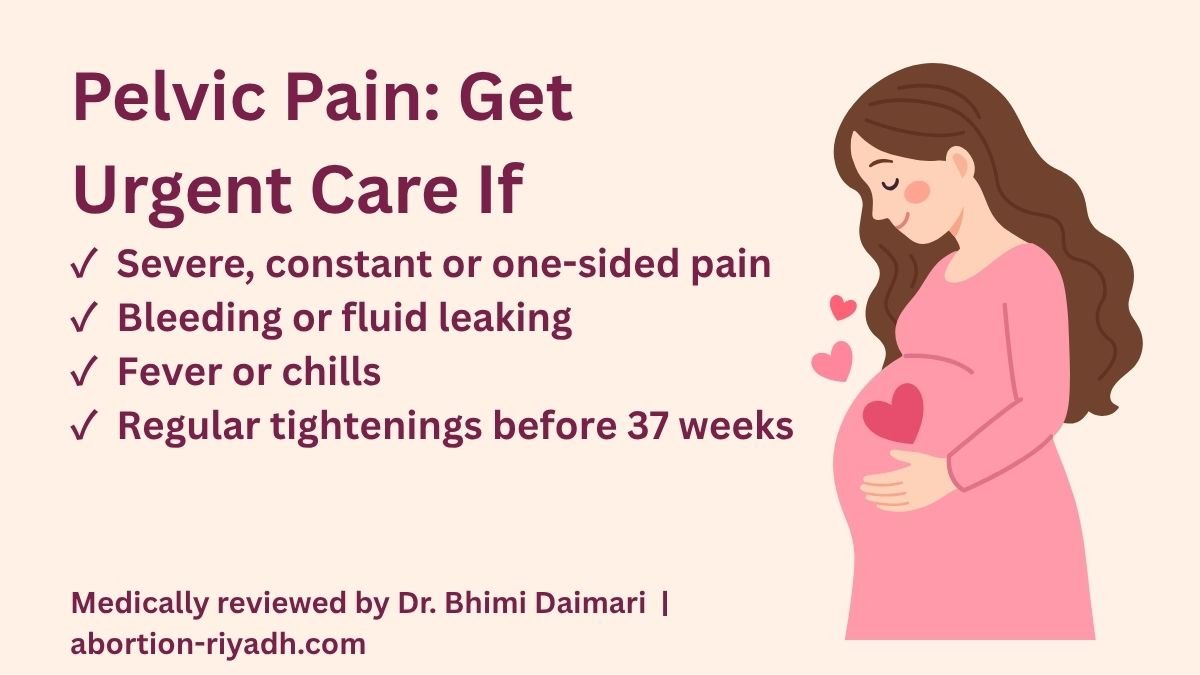
Go to an emergency department or call your local emergency number (997 in Saudi Arabia, 911 in the US) if you have: severe or constant pelvic or belly pain; pain on one side in early pregnancy, especially with bleeding, shoulder-tip pain, dizziness or fainting; heavy vaginal bleeding or clots; a hard, tender uterus; regular tightenings or a gush or trickle of fluid before 37 weeks; fever or chills; pain or burning when you pee with back pain; or your baby moving less than usual.
If you are not sure which group your pain belongs to, call your doctor or maternity unit and describe it. It is always better to be checked and reassured.
Frequently Asked Questions
What does SPD pain feel like in pregnancy?
Most people describe an ache or a sharp, shooting pain over the pubic bone at the front, sometimes with a clicking or grinding feeling. It can spread to the hips, lower back, perineum and inner thighs. It is worse when you walk, climb stairs or separate your legs.
How early can SPD start in pregnancy?
It can begin as early as the first trimester, although it is more common from the middle of pregnancy onwards. It often starts earlier in second and later pregnancies. Tell your doctor or midwife as soon as you notice it.
Does pelvic girdle pain harm the baby?
No. The pain comes from your joints, ligaments and muscles, and your baby is not affected by it. The effect is on your comfort, sleep and mobility, which is why treatment is still worthwhile.
Does SPD go away after birth?
For most people it improves within a few weeks to months after the birth. About 1 in 10 continue to have some pain and need ongoing physiotherapy. Keep following the movement advice in the early weeks with your newborn.
Is walking good or bad for pelvic girdle pain?
Gentle walking within your pain limits is good, because staying active keeps the supporting muscles working. Take shorter steps and break long walks into several short ones. Stop before the pain builds up, not after.
Can I have a normal delivery with SPD?
Yes, most women with SPD have a vaginal birth. Let your birth team know your pain-free range for parting your knees and ask about upright, kneeling or side-lying positions. A caesarean is not usually recommended for SPD alone.
How should I sleep with pelvic pain in pregnancy?
Lie on your side with a pillow between your knees and ankles so your top leg stays level with your hip. To turn over, squeeze your knees together and roll in one piece, or turn through an all-fours position. Satin sheets or nightwear can make turning easier.
What is lightning crotch in pregnancy?
It is a popular name for sudden, sharp, shooting pains in the vagina, rectum or pelvis late in pregnancy. They are thought to come from the baby pressing on nerves around the cervix and pelvis and last only seconds. They are harmless, but regular pains with tightenings should be checked.
Why does my pelvis hurt when I roll over in bed?
Turning asks one side of the pelvis to move against the other, which strains joints that are already irritated. This is one of the hallmark signs of pelvic girdle pain. Keeping your knees together as you roll usually reduces it.
Will SPD come back in my next pregnancy?
It is more likely if you have had it before, but it is not certain, and it may be milder. Getting fit between pregnancies and seeing a physiotherapist early next time can help. Tell your care team about your history at your first visit.
Related guides
- Round ligament pain in pregnancy
- Early pregnancy cramps
- When do you start showing in pregnancy?
- Signs of a miscarriage
- Pregnancy of unknown location
- Is diarrhea a sign of pregnancy?
Sources
- RCOG – Pelvic girdle pain and pregnancy (patient information)
- NHS – Pelvic pain in pregnancy
- Cleveland Clinic – Symphysis pubis dysfunction
- ACOG – Preterm Labor and Birth
- ACOG – Ectopic Pregnancy
- NHS – Stomach pain in pregnancy
This page is general health information and does not replace advice from your own doctor. In an emergency, call your local emergency number (997 in Saudi Arabia, 911 in the US).