
Medically reviewed by Dr. Bhimi Daimari, MBBS, MS (Obstetrics and Gynaecology) · Review date: 8 November 2026
Being told you have a molar pregnancy is confusing and often frightening – most women have never heard the term before. This guide explains, in plain language, what a molar pregnancy is, the difference between a complete and a partial mole, the symptoms and ultrasound signs, how it is treated, why the follow-up blood tests matter so much, and what it means for a future pregnancy.
Quick answer: A molar pregnancy is a rare problem with fertilisation in which the placenta grows abnormally into fluid-filled cysts and a healthy baby cannot develop. It affects roughly 1 in 500–600 pregnancies. It is usually found on an early scan or because of bleeding, is treated with a simple suction procedure, and is then followed by regular hCG blood or urine tests until the hormone is back to normal. Even in the small number of women who need further treatment, the cure rate is over 99%, and most go on to have healthy pregnancies later.

What Is a Molar Pregnancy?
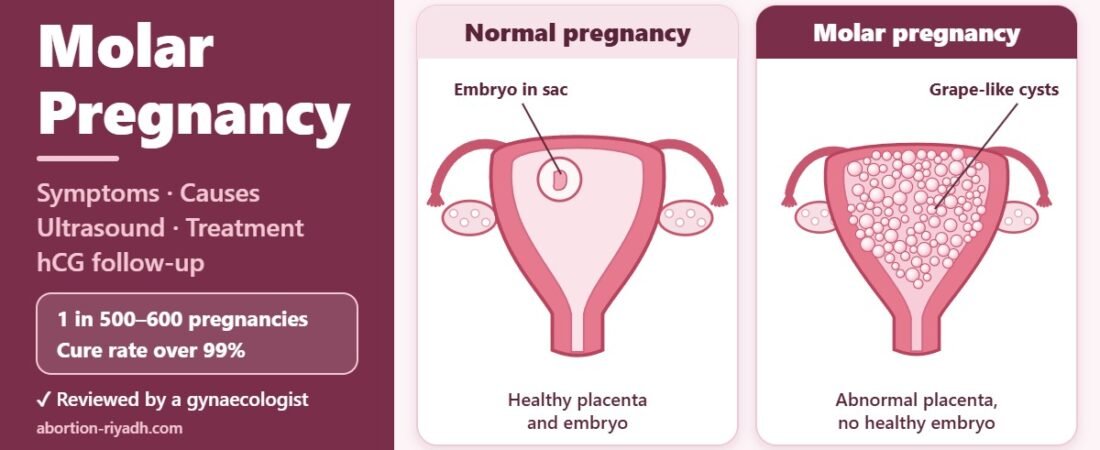
A molar pregnancy (doctors call it a hydatidiform mole) belongs to a group of conditions called gestational trophoblastic disease. The “trophoblast” is the layer of cells that normally becomes the placenta. In a molar pregnancy, something goes wrong with the genetic material at the moment of fertilisation, so these placental cells grow too fast and form a mass of small, grape-like cysts instead of a normal placenta.
The pregnancy still produces the pregnancy hormone hCG – often in very large amounts – so a pregnancy test is positive and you may feel pregnant. But the pregnancy cannot continue normally and needs medical treatment.
In the UK, about 1 in every 500 to 600 pregnancies is molar. It is more common at the two ends of the reproductive years and after a previous molar pregnancy (see risk factors below).
Complete vs Partial Molar Pregnancy
There are two types. Knowing which one you had matters, because it changes how long your follow-up lasts and how likely you are to need further treatment.
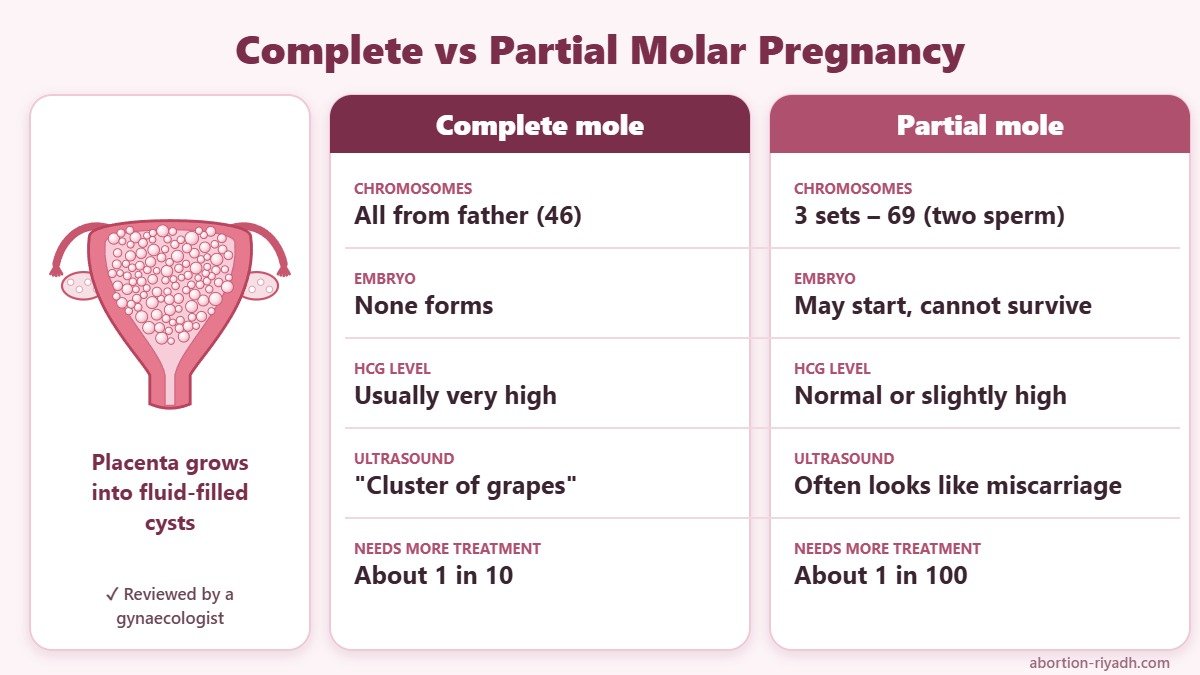
| Complete molar pregnancy | Partial molar pregnancy | |
|---|---|---|
| What happens at fertilisation | An egg with no genetic material from the mother is fertilised; all the chromosomes come from the father. | A normal egg is fertilised by two sperm, giving 3 sets of chromosomes instead of 2 (triploidy). |
| Embryo | No embryo forms – only abnormal placental tissue. | An embryo may start to develop, but it is severely abnormal and cannot survive. |
| hCG level | Usually very high. | Often normal or only slightly high. |
| How it is usually found | Bleeding, severe sickness, or a typical appearance on an early scan. | Often looks like a miscarriage; diagnosed when the tissue is examined in the lab. |
| Need for treatment after removal | About 1 in 10. | About 1 in 100. |
Molar Pregnancy Symptoms
Many molar pregnancies are now picked up on a routine early ultrasound before any symptoms appear. When symptoms do occur, they usually start in the second or third month of pregnancy:
- Vaginal bleeding in the first trimester – anything from dark brown spotting to bright red bleeding (see how much bleeding is normal in early pregnancy).
- Severe nausea and vomiting, often worse than ordinary morning sickness, because hCG is so high.
- Pelvic pressure or discomfort.
- Passing small grape-like cysts from the vagina (not common, but very typical when it happens).
- A womb that is larger than expected for the stage of pregnancy.
Because most cases are now diagnosed early, the serious complications seen in the past are rare today. They include high blood pressure (pre-eclampsia) before 20 weeks, an overactive thyroid (fast heartbeat, shaking, sweating), ovarian cysts, and anaemia from ongoing bleeding.
Many of these symptoms also happen in normal pregnancies or in a miscarriage, so having one of them does not mean you have a molar pregnancy. A scan and blood tests are needed to tell the difference.
Molar pregnancy discharge
The discharge linked to a molar pregnancy is typically dark brown – sometimes described as looking like prune juice – because the blood is old. It may come and go for days or weeks. Occasionally, small clear or white grape-like vesicles are passed. If you pass any tissue, keep it if you can and show it to your doctor, because laboratory testing is how a molar pregnancy is confirmed. For other types of discharge in early pregnancy, see our guide to early pregnancy discharge.
Who Is at Higher Risk?
A molar pregnancy is caused by a chance error at fertilisation, and in most cases there is nothing anyone could have done to prevent it. Some factors make it more likely:
- Age: the risk is highest in very young mothers (under about 15–20) and in women over about 40–45.
- A previous molar pregnancy: the chance of another one is about 1 in 100 – higher than average, but still low.
- Ethnic background: molar pregnancies are seen more often in women of Asian origin.
- Previous miscarriages may slightly increase the risk.
Molar Pregnancy Ultrasound and Diagnosis
A molar pregnancy is suspected from a combination of findings, and confirmed in the laboratory:
- Ultrasound: a complete mole often shows a typical “cluster of grapes” or “snowstorm” pattern inside the womb with no baby or pregnancy sac. A partial mole is harder to see – it may show an abnormal, thickened placenta with cystic spaces and a small or abnormal embryo, and often simply looks like a missed miscarriage.
- hCG blood test: a level much higher than expected for the number of weeks raises suspicion, especially of a complete mole. Read more about normal hCG levels by week.
- Histology (lab testing of the tissue): the only way to be certain, and to know whether the mole is complete or partial. This is why tissue removed after a miscarriage is often sent to the lab.
Molar Pregnancy Treatment and Surgery
The aim of treatment is to remove all the molar tissue from the womb.
- Suction evacuation (also called suction curettage or a D&C) is the main treatment. A thin tube is passed through the cervix to gently remove the tissue. The tissue is sent to the lab to confirm the type of mole.
- Medical removal with tablets is generally avoided for a complete mole, but may sometimes be used for a partial mole when the embryo is too large for suction. Your specialist will decide.
- Hysterectomy (removal of the womb) is rarely needed. It may be discussed with older women who do not want more children, because it lowers the chance of persistent disease – but follow-up blood tests are still needed afterwards.
- Rh-negative blood group: if your blood group is Rh negative, tell your doctor – you may need an anti-D injection after the procedure.
After the procedure, light bleeding and mild cramps for a few days are expected. Your team will tell you when to expect your next period and what warning signs to look out for.
hCG Follow-Up After a Molar Pregnancy
Follow-up is the most important part of treatment. Because molar tissue can occasionally keep growing after it has been removed, your hCG level is checked regularly – usually with a blood or urine test every 2 weeks – until it falls to normal. In the UK, everyone with a molar pregnancy is registered with a specialist trophoblastic centre that organises these tests.
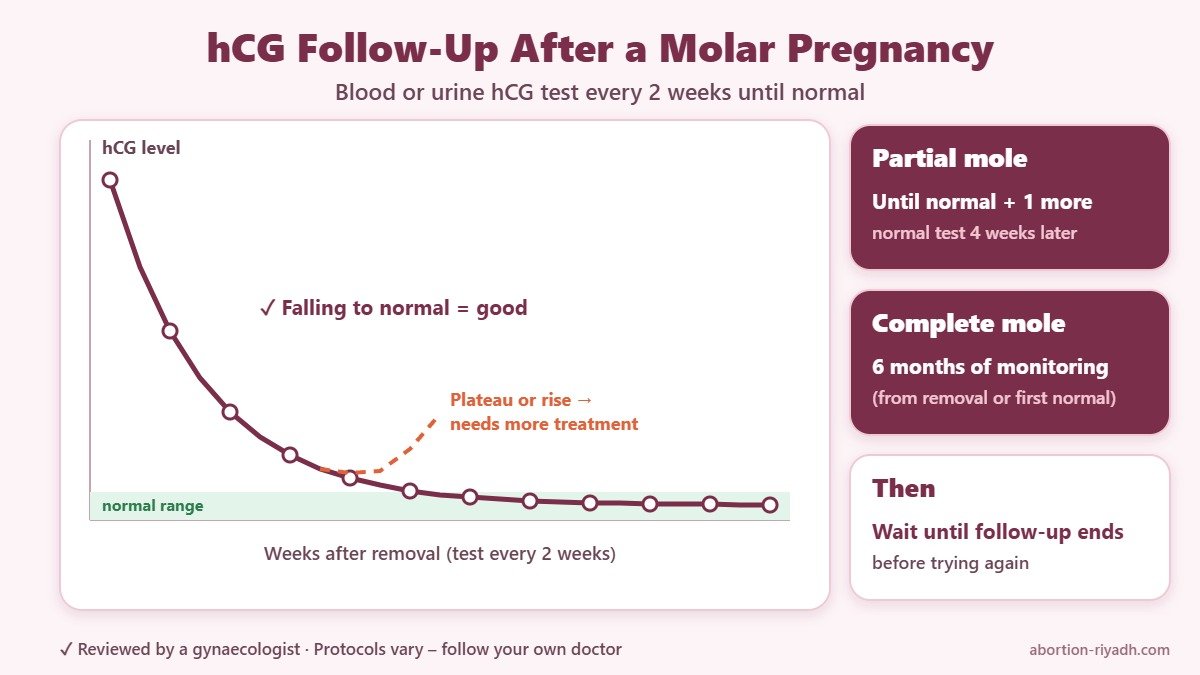
| Type | How long monitoring usually lasts (UK specialist-centre protocol) |
|---|---|
| Partial mole | Tests every 2 weeks until hCG is normal, then one more normal sample 4 weeks later, and follow-up ends. |
| Complete mole – hCG normal within 56 days | Monitoring continues until 6 months after the evacuation. |
| Complete mole – hCG takes longer than 56 days | Monitoring continues for 6 months after the first normal result. |
Protocols differ slightly between countries and hospitals, so always follow the schedule your own doctor gives you. The key point is not to skip any tests: a rising or plateauing hCG is the earliest sign that more treatment is needed, long before you would feel unwell.
Persistent Disease and Molar Pregnancy Cancer
In a minority of women, the hCG level stops falling or starts to rise again after the evacuation. This is called persistent trophoblastic disease or gestational trophoblastic neoplasia (GTN). It happens after about 1 in 10 complete moles and about 1 in 100 partial moles.
Rarely, this becomes a cancer called choriocarcinoma, which can spread to other parts of the body. This sounds alarming, but GTN is one of the most treatable conditions in medicine: it usually responds very well to chemotherapy, and the cure rate is over 99% – which is exactly why the follow-up tests are so important.
Tell your doctor promptly if, after treatment, you have:
- Bleeding that continues or returns, especially heavy bleeding.
- Ongoing pelvic pain.
- A cough, coughing up blood, or shortness of breath.
- Severe headaches or other new symptoms.
Contraception and Trying Again
- Wait until your follow-up has finished before trying to conceive. A new pregnancy also produces hCG, which would hide a rise caused by persistent disease. After chemotherapy, women are usually advised to wait 12 months.
- Use reliable contraception during follow-up. Ask your doctor which method suits you; some specialists prefer to delay fitting a coil (IUD) until hCG is normal. See our overview of birth control pills.
- The chance of another molar pregnancy is about 1 in 100 – so around 99 in 100 women do not have another one.
- In your next pregnancy, your doctor will usually offer an early ultrasound, and in the UK an hCG check is also done after the pregnancy ends to make sure the level returns to normal.
Coping With a Molar Pregnancy
A molar pregnancy is a pregnancy loss, and it is normal to grieve – even though there was no baby developing in the usual way. Many women also feel anxious during months of blood tests, or frustrated about having to wait before trying again. These feelings are valid. Talk to your partner, family or doctor, and ask for support if low mood or anxiety is affecting daily life. Our articles on what causes miscarriage and miscarriage rates by week may help you understand pregnancy loss more broadly.
When to See a Doctor
Contact your doctor or go to the emergency department (in Saudi Arabia, call 997) if you are pregnant or have recently been treated for a molar pregnancy and you have:
- Heavy vaginal bleeding (soaking a pad in an hour), or passing clots or tissue.
- Severe abdominal or pelvic pain.
- Severe vomiting with signs of dehydration (very little urine, dizziness).
- Headaches, blurred vision or swelling – possible signs of high blood pressure.
- Fast heartbeat, shaking or feeling very hot – possible thyroid problems.
Bleeding with one-sided pain in early pregnancy can also be a sign of an ectopic pregnancy, which is an emergency. For more about bleeding in pregnancy, see our guides to threatened miscarriage and what a miscarriage looks like, or return to our medically reviewed women’s health guide.
Frequently Asked Questions
How is molar pregnancy removed?
In most hospitals it is done as a day procedure: you are given a general anaesthetic or sedation, the suction itself takes only about 10–15 minutes, and most women go home the same day once they have recovered from the anaesthetic. Your doctor may give medicine beforehand to soften the cervix. Afterwards, expect light bleeding for a few days, and arrange your first hCG test before you leave.
What is the cause of molar pregnancy?
It is caused by a random error in the genetic material at the moment the egg is fertilised – not by anything you did. It is not caused by stress, work, exercise, food, sex or medicines, and it is not passed on like an infection. It is also not a sign that you or your partner have a “genetic disease”.
How do you know if you have a molar pregnancy?
You cannot tell at home – a home pregnancy test is simply positive, and the symptoms overlap with normal pregnancy and miscarriage. Many women only find out a few weeks after a miscarriage, when the hospital receives the lab report on the tissue and calls them back. If you had a miscarriage and are told the tissue was “molar”, you will be referred for hCG follow-up even if you already feel well.
Is there a baby during a molar pregnancy?
In a complete mole, no – and in a partial mole the embryo cannot survive. A very rare exception is a twin pregnancy in which one twin is a normal baby with its own healthy placenta and the other is a complete mole. Some of these pregnancies can be continued under close specialist care, and some result in a healthy baby, but the risks (bleeding, high blood pressure, persistent disease) need careful discussion with a specialist team.
Will a home pregnancy test be positive with a molar pregnancy?
Yes. A molar pregnancy produces hCG, often in very high amounts, so home tests are usually strongly positive. During follow-up, a home test is not a substitute for the hCG tests your hospital arranges, because it cannot measure the exact level or show whether it is falling.
Can a molar pregnancy pass on its own?
Sometimes the tissue is partly passed like a miscarriage, but it is rarely passed completely. Even if bleeding stops, you still need an ultrasound, usually a suction procedure to make sure the womb is empty, and the full course of hCG follow-up.
Can I get pregnant normally after a molar pregnancy?
Yes. A molar pregnancy does not usually affect your ability to get pregnant, and even women who needed chemotherapy generally have normal fertility afterwards. The main thing is timing: wait until your doctor confirms that follow-up is complete.
Sources
- Imperial College Healthcare NHS Trust (Charing Cross Trophoblastic Disease Service) – Information about molar pregnancy
- Mayo Clinic – Molar pregnancy
- RCOG – Management of Gestational Trophoblastic Disease (Green-top Guideline No. 38)
- MedlinePlus (U.S. National Library of Medicine) – Hydatidiform mole
Medical disclaimer: This article is for general education only. It does not replace advice, diagnosis or treatment from a qualified doctor.