
Abortion Pills in Riyadh and Saudi Arabia: A Complete Medical Guide
Abortion pills, also called pills for abortion or medication abortion, are medicines used to end an early pregnancy without surgery. This guide explains what they are, how they work, common and serious side effects, what recovery looks like, the legal situation in Saudi Arabia, and where to get safe care in Riyadh, Jeddah and Dammam. It is general education, not personal medical advice.
- Doctor reviewedEvery guide is checked by a gynaecologist.
- Evidence basedBuilt on WHO, NHS and ACOG guidance.
- Judgement-freeRead at your own pace. No sign-up is needed.
- Arabic & EnglishClear guides in both languages.


- 5,000+patients cared for by Dr. Bhimi Daimari
- Medically reviewedby an MS (Obstetrics & Gynaecology) specialist
- 120+guides in Arabic and English
- Evidencefrom WHO, NHS & ACOG
- UpdatedNovember 2026
Quick answers: abortion pills in Riyadh and Saudi Arabia
- Are abortion pills legal in Saudi Arabia?
- Abortion is generally illegal in Saudi Arabia. It is allowed only in limited medical circumstances, mainly a serious risk to the mother’s health or life. Read more on abortion law in Saudi Arabia.
- Can you buy them in Riyadh?
- No. Abortion pills in Riyadh are not sold over the counter. Mifepristone and misoprostol are prescription-only medicines controlled by the SFDA.
- Are pills sold online real?
- Often not. Abortion pills in Saudi Arabia that are offered online, on WhatsApp or on social media sit outside the SFDA system and are often fake, expired or the wrong medicine. You can report suspect medicines to the SFDA on 19999.
- Where can I get safe medical help?
- See a doctor at a licensed hospital or clinic, or call the Ministry of Health helpline on 937. This site gives medical information only and does not sell any medicine.
- When is it an emergency?
- Call 997 if you soak two or more large pads an hour for two hours, have severe pain, faint, or feel pain on one side or at the tip of the shoulder. A fever of 38°C or higher lasting over 24 hours, or foul-smelling discharge, also needs urgent care.
Health Information
Doctor-reviewed guides on pregnancy, bleeding, miscarriage and recovery after abortion.
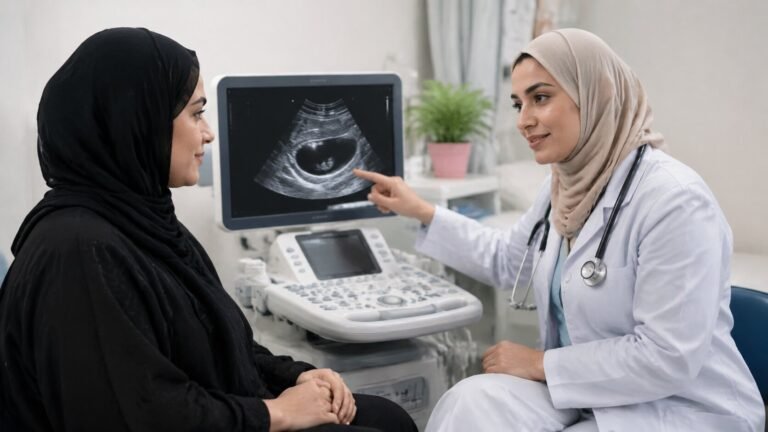 Miscarriage
Missed Abortion (Missed Miscarriage): Signs, Diagnosis, Treatment and Recovery
How a missed miscarriage is found, the treatment options and recovery.
 Bleeding & Discharge
Discharge Before Period vs Early Pregnancy: How to Tell
Creamy, watery or egg-white discharge? Compare discharge before a period with early pregnancy, learn what each type m…
 Pregnancy
Can Precum Cause Pregnancy? The Real Risk and What to Do Next
Yes, precum can cause pregnancy, though the risk is lower than with ejaculation. See the evidence, pull-out failure r…
 Pregnancy
False Positive Pregnancy Test: Real Causes and What to Do Next
A false positive pregnancy test is rare. Learn the real causes, from chemical pregnancy to evaporation lines, why fal…
 Pregnancy
First 72 Hours of Pregnancy Symptoms: What You Can Really Feel
In the first 72 hours after conception most people feel nothing. See the timeline from fertilisation to implantation…
 Pregnancy
Chemical Pregnancy: Symptoms, Causes, hCG Levels and Trying Again
A chemical pregnancy is a very early miscarriage before a scan can show it. Learn the symptoms, hCG levels, causes an…
 Miscarriage
Signs of a Miscarriage: Early Symptoms by Week
Signs of a miscarriage explained week by week: bleeding, cramps, tissue and missed miscarriage with no signs. Learn w…
 Medicines
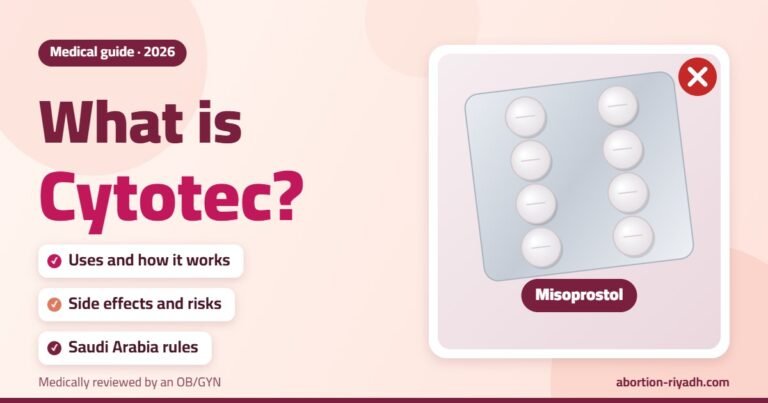
What Is Cytotec? Uses, Safety and Saudi Arabia Rules
What Cytotec (misoprostol) is, its licensed and obstetric uses, side effects, the pregnancy warning and the rules in…
 Bleeding & Discharge
Brown Discharge: Causes, Colours and When to Worry
Brown discharge is usually old blood. Learn the common causes, what it means before or after a period or in pregnancy…
 Miscarriage
Pregnancy Test After Abortion or Miscarriage: When to Test and How Long It Stays Positive
Still positive after a miscarriage or abortion? Learn how long hCG lasts, when to take a pregnancy test, how to read…
 Pregnancy
 of Unknown Location: What It Means and What Happens Next
Positive test but nothing on the scan? Learn what a pregnancy of unknown location means, the 4 possible outcomes, how…
 Bleeding & Discharge
How Much Bleeding Is Normal in Early Pregnancy? Spotting vs Bleeding
Spotting or real bleeding? Learn how much bleeding is normal in early pregnancy, what the colour means, common causes…
 After Abortion
الدورة بعد الإجهاض: متى تعود وما هو الطبيعي
When periods usually return and what the first cycle can be like.
 After Abortion
الحالة النفسية بعد الإجهاض: المشاعر الطبيعية ومتى تطلبين المساعدة
Common feelings afterwards and where to find support.
The Two Medicines: Mifepristone and Misoprostol
“Abortion pills” usually refers to two medicines, known by their generic names below. Brand names and packaging differ from country to country. They are sometimes used together and sometimes misoprostol is used alone; a healthcare professional decides which approach is appropriate.
Mifepristone
Blocks progesterone, the hormone a pregnancy needs to continue.
Read the mifepristone guideMisoprostol
Softens the cervix and makes the uterus contract and empty.
Read: misoprostol in Saudi ArabiaPictures alone cannot confirm a pill is genuine. For brand names and what changes at each stage of pregnancy, see our guide to abortion pill names.
Unsafe Sources to Avoid
Counterfeit abortion pills are widely sold online, especially where access is restricted. Fake pills may contain the wrong medicine, the wrong strength, or nothing at all, which can lead to a failed abortion, delayed care or serious harm.
Warning signs of an unsafe source
- Sellers who contact you only through WhatsApp or social media
- No prescription or medical assessment required
- Missing packaging, no batch number or no expiry date
- Loose or repackaged tablets
- Any price list, delivery offer or request for payment before a medical check
In Saudi Arabia, medicines are regulated by the Saudi Food and Drug Authority (SFDA). Only use medicines supplied through regulated healthcare channels.
Full guide: how to spot fake abortion pillsHow Do Abortion Pills Work?
Mifepristone stops the hormonal support the pregnancy needs. Misoprostol then causes cramping and bleeding, which empties the uterus. The experience is similar to an early miscarriage. Combined treatment is generally more effective than misoprostol alone.
Full explanation: How does the abortion pill work?Side Effects: What Is Normal?
Common and expected
- Cramping, which can be strong
- Bleeding heavier than a period, sometimes with clots
- Nausea, vomiting or diarrhoea
- Chills or a temporary low fever
- Tiredness, headache or dizziness
Less common complications
- Incomplete abortion
- A pregnancy that continues
- Heavy or prolonged bleeding
- Infection
Most complications can be treated successfully when they are recognized early.
Full guide: abortion pills side effects and safetyWarning Signs: When to Get Urgent Medical Care
Go to a hospital immediately if you have:
- Bleeding that soaks two or more large pads an hour for two hours in a row
- Severe or worsening abdominal pain
- Fainting or severe dizziness
- A fever of 38°C or higher that lasts more than 4 hours, or any fever that starts more than a day after the treatment
- Foul-smelling vaginal discharge
- Feeling very unwell (weakness, vomiting, diarrhoea or tummy pain) more than a day after the treatment, even without a fever
- Severe pain on one side or shoulder-tip pain (possible ectopic pregnancy)
Abortion pills do not treat an ectopic pregnancy, which can be life-threatening.
How Long Do Abortion Pills Take to Work (and Dissolve)?
Cramping and bleeding usually begin within a few hours of misoprostol, and the heaviest part often passes within a day. Lighter bleeding or spotting can continue for days to a few weeks. Bleeding alone does not prove the abortion is complete; follow-up with a healthcare professional confirms it.
People often ask how long the tablets take to dissolve. How the medicine is given is decided and explained by your clinician, and this page does not give instructions for use. A tablet dissolving does not show that the treatment has worked; only follow-up with a healthcare professional can confirm that.
Recovery: Rest, Diet and Aftercare
- Rest: many people return to normal activities within a day or two. Avoid heavy exercise until you feel well.
- Diet: no special diet is required. Eat light, regular meals, drink plenty of fluids, and include iron-rich foods such as lentils, spinach and red meat if bleeding is heavy. Avoid alcohol while recovering.
- Pain relief: ask a healthcare professional which pain relievers are suitable for you.
- Periods and fertility: your period usually returns in 4–8 weeks, but you can ovulate and become pregnant before it does.
- Follow-up: a home pregnancy test can stay positive for several weeks, so follow the testing plan your clinician gives you.
Food and Drink During Recovery
No food is forbidden, but light meals, plenty of fluids and iron-rich foods help, and alcohol is best avoided. See the full list of what not to eat after abortion pills.
Read: What to expect after taking the abortion pillMedication vs. Surgical Abortion
| Medication abortion | Surgical abortion | |
|---|---|---|
| How it works | Medicines empty the uterus | A clinician removes tissue through the cervix |
| Typical timing | Early pregnancy | Early or later pregnancy |
| Where | Under medical care; in Saudi Arabia only in authorised hospitals | Under medical care; in Saudi Arabia only in authorised hospitals |
| Experience | Cramping and bleeding over hours to days | Short procedure with anaesthesia or sedation |
Saudi Arabia: Legal Overview
Abortion is restricted in Saudi Arabia. It is generally permitted only for medical reasons, such as a serious risk to the mother’s life or health, and requires approval through authorized medical channels. Selling or using abortion medicines outside regulated healthcare is not permitted.
For the 120-day limit, who must approve care and what is not permitted, read our full guide to abortion in Saudi Arabia. For current guidance, consult a licensed doctor at an authorized facility or visit the Saudi Ministry of Health.
Can You Buy Abortion Pills From a Pharmacy in Saudi Arabia?
Short answer: No. In Saudi Arabia, pharmacies cannot sell abortion pills (mifepristone or misoprostol for abortion) over the counter. Under Article 23 of the Law of Practicing Healthcare Professions, a pharmacist may only dispense prescription medicines with a prescription from a doctor licensed in Saudi Arabia, and the law’s Executive Regulations (item 22/3) prohibit dispensing abortion-causing medicines. Legal abortion is only done in authorized hospitals, after medical committee approval.
- All licensed pharmacies, including the large pharmacy chains, must follow the same prescription rules.
- Online, WhatsApp or social-media sellers offering pills without a prescription are acting outside the law, and their pills are often fake.
- If you are pregnant and need advice, see a licensed doctor or call the MOH helpline on 937. In an emergency, call 997.
Official sources: Law of Practicing Healthcare Professions, Articles 22–23 (Saudi Ministry of Investment) · Executive Regulations, item 22/3 (Saudi Ministry of Health, Arabic) · Medication dispensing rules (Saudi Ministry of Health, 2025)
Getting Care in Riyadh, Jeddah and Dammam
Abortion pills are not available over the counter in Saudi Arabia, so the safe route in every city is the same: a licensed doctor at a Ministry of Health hospital or an authorized private hospital. A doctor can confirm how far along the pregnancy is, rule out an ectopic pregnancy, explain your options under Saudi law and arrange follow-up.
Riyadh
There is no abortion clinic in Riyadh. Start at a Ministry of Health hospital or licensed private hospital in the city. Call 937 if you are not sure where to go. You can also book a doctor visit through the Ministry of Health Sehhaty app.
Jeddah
The same rules apply. Ask a hospital doctor or call 937 for the right department.
Dammam
Use Ministry of Health or licensed private hospitals in the Eastern Province, or call 937 for advice.
Avoid online sellers in any city
Accounts offering abortion pills with delivery in Riyadh, Jeddah or Dammam operate outside the law, and many sell fake pills or take payment and disappear. Any price they quote is a warning sign, as our guide to abortion pill cost explains.
Frequently Asked Questions
Are abortion pills safe?
When genuine medicines are used with medical guidance in early pregnancy, serious complications are uncommon. The biggest risks come from fake pills and from not having medical follow-up.
What are the names of abortion pills?
The generic names are mifepristone and misoprostol. Brand names vary by country.
Do abortion pills affect future fertility?
An uncomplicated medication abortion does not generally affect future fertility.
How do I know the abortion is complete?
Through the follow-up your clinician recommends, which may include a specific pregnancy test, a blood test or an ultrasound.
How long do abortion pills take to work?
Cramping and bleeding usually begin within a few hours of misoprostol, and the heaviest part often passes within a day. Follow-up confirms the abortion is complete.
Can I get an abortion in Saudi Arabia?
Only if a medical committee at an authorised hospital approves it on medical grounds. The first step is to see an obstetrician-gynaecologist at a Ministry of Health or licensed private hospital, or call 937 for guidance. See our guide to abortion law in Saudi Arabia.
Can we take abortion pills without consultation?
No. A doctor must first confirm how many weeks pregnant you are and rule out an ectopic pregnancy. Without medical care, heavy bleeding, an incomplete abortion or an emergency can be missed.
Are birth control pills allowed in Saudi Arabia?
Yes. Birth control pills are legal in Saudi Arabia. A doctor can advise which type suits you, and a prescription may be needed. See our birth control pills guide.
Do abortion pills change your body?
The changes are temporary: bleeding, cramps and hormone changes for a few weeks. Your period usually returns in 4 to 8 weeks, and an uncomplicated medical abortion does not generally affect future fertility.
How painful is the abortion pill at 4 weeks?
Most women feel cramps like a strong period. Pain is usually milder in very early pregnancy. A doctor can advise on safe pain relief. Read our full guide: how painful the abortion pill is, week by week.
Which abortion is better, pill or vacuum?
Neither is better for everyone. Pills avoid a procedure but take longer and the bleeding happens over hours. Vacuum aspiration is a short procedure done in a hospital or clinic. A doctor helps choose based on the weeks of pregnancy and your health. Read more on how an abortion is done.
Can abortion pills fail?
Yes, but it is uncommon. Sometimes the abortion is incomplete or the pregnancy continues, so a follow-up test or scan is important, especially if there is little or no bleeding or pregnancy symptoms continue. See incomplete abortion.
Can a pharmacist give abortion pills without a prescription in Saudi Arabia?
No. Under Article 23 of the Saudi Law of Practicing Healthcare Professions, a pharmacist may not dispense prescription medicines without a prescription from a doctor licensed in Saudi Arabia, and the Executive Regulations (item 22/3) prohibit dispensing abortion-causing medicines.
Are abortion pills sold at Saudi pharmacies?
No. Abortion pills are not sold over the counter in Saudi pharmacies. Legal abortion is only provided in authorized hospitals after medical committee approval. Pills offered online or through WhatsApp are illegal and often fake.
Is there an abortion clinic near me in Riyadh?
No. There are no stand-alone abortion clinics in Riyadh or anywhere in Saudi Arabia, and abortion on request is not available. A legal abortion is only done in an authorised hospital, in limited medical situations, after approval by a medical committee. If you are pregnant and worried or bleeding, see an obstetrician-gynaecologist at a licensed hospital, or call 997 in an emergency. Read more about abortion law in Saudi Arabia and where to get safe care.
Is abortion legal in Saudi Arabia?
Abortion is restricted in Saudi Arabia. It is permitted only in limited circumstances, mainly to protect the woman’s life or health and within set time limits, and it must be done in an authorised hospital with medical-committee approval and the required consent. Outside these situations it is illegal, and buying pills online is both illegal and unsafe. See our guide to abortion law in Saudi Arabia.
Are abortion pills sold online or on WhatsApp in Saudi Arabia real?
Many are not. Mifepristone and misoprostol are prescription-only and controlled by the SFDA, so anything sold online, on WhatsApp or on social media is outside that system. These pills are often fake, expired or a different medicine altogether. See how to spot fake abortion pills, and report suspect medicines to the SFDA on 19999.
What should I do if I took abortion pills and I’m bleeding heavily in Riyadh?
Call 997 or go to the nearest hospital emergency department if you are soaking two or more large pads an hour for two hours, if you faint, or if the pain is severe. Do not wait at home to see whether it settles. A fever of 38°C or higher that lasts over 24 hours, foul-smelling discharge, or pain on one side or at the tip of the shoulder also need urgent medical care.
What happens if abortion pills are taken during an ectopic pregnancy?
The pills do not work. Misoprostol does not treat an ectopic pregnancy, so the pregnancy stays where it is and can rupture, which is life-threatening. Only a scan can rule an ectopic pregnancy out. One-sided pain or shoulder-tip pain are warning signs: call 997 straight away. More detail is on our ectopic pregnancy page (Arabic).
Is Cytotec the same as misoprostol?
Yes. Cytotec is a brand name and misoprostol is the active ingredient, so they are the same medicine under two names. In the Kingdom it is prescription-only and controlled by the SFDA, and it is not sold over the counter. Read what Cytotec is and our guide to misoprostol in Saudi Arabia.
About Our Medical Reviewer
Dr. Bhimi Daimari
Medically reviewed · Last updated: 11 November 2026
Dr. Bhimi Daimari (MBBS, MS, Obstetrics and Gynaecology) is a medical doctor registered with the Assam Medical Council (Registration Number 23218). She completed her postgraduate studies in Obstetrics and Gynaecology at Fakhruddin Ali Ahmed Medical College, Barpeta, Assam, and her name appears in the January 2025 MS examination result with a PASS status. She serves as the lead medical reviewer for Abortion Riyadh, providing clinical oversight to ensure all educational content on medication abortion, reproductive health, and aftercare adheres to medical accuracy, safety, and evidence-informed standards.
View full profileReferences
- World Health Organization: Abortion Care Guideline
- NHS: Abortion
- ACOG: Induced Abortion
- Saudi Ministry of Health
- Saudi Law of Practicing Healthcare Professions – Articles 22 and 23 (official English translation)
- Saudi Ministry of Health – Law of Practicing Healthcare Professions and Executive Regulations (Arabic)
- Saudi Ministry of Health – Medication dispensing compliance (26 Feb 2025)
Medical disclaimer: This page is for general education only and does not replace advice from a qualified healthcare professional. Read how we review content in our medical review policy and editorial policy. If you have severe symptoms, seek emergency care immediately.